In-Depth Product Analysis for Informed Consumer Choices

Best 5 GPS Trackers of 2026
Real-Time Location on Your Phone
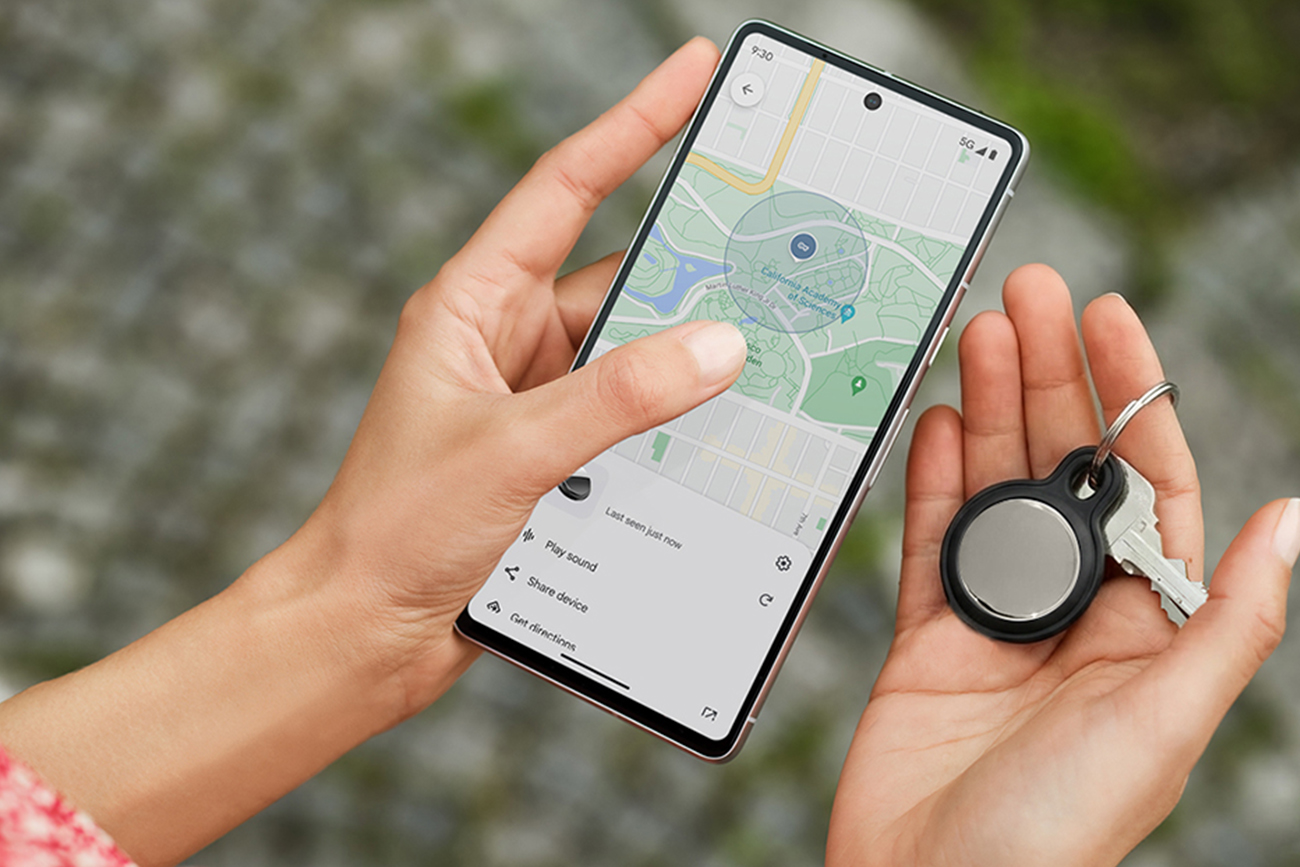
Ever had something valuable simply vanish, and nobody could tell you where it went? 🧳 Mine was a suitcase that never made it to the hotel. Two days of phone calls, three departments, and the honest answer from every person I spoke to was that nobody actually knew where it was.
Not knowing turns an ordinary day into a bad one. A car parked somewhere unfamiliar, a trailer left at a jobsite overnight, a bag that never came off the carousel — the traditional answers are phone calls, guesswork and waiting on somebody else, and not one of them tells you where the thing is right now.
A tracker replaces all of that with a dot on a map. Location goes straight to your phone, alerts arrive the moment something moves, and you stop calling around to piece together what already happened. That’s the difference between an afternoon of worry and a ten-second look at a screen — and it’s why these have gone from fleet equipment to something ordinary households buy.
After testing 28 trackers, the one I’d hand most people is the Clorant Mini GPS Tracker. It’s sold as a one-time purchase with no monthly subscription 📍, and geofencing plus movement alerts handle the day-to-day work without you ever opening the app.
Below is what to look for, what to avoid, and how the five compare — for cars, trailers, tools, luggage and anything else you’d rather not lose track of. Two of the five run on ongoing service plans, one plugs into a car and never needs charging, and the differences matter more than the spec sheets suggest.

By Wes Holloway
Wes Holloway is a seasoned Location Technology Analyst with years of experience testing over 28 GPS trackers. Specializes in independent reviews that help people choose accurate, dependable tracking for vehicles, assets and everyday belongings.
Our Evaluation Standards
Tracking Accuracy and Update Speed
Evaluated how quickly a new position reaches your phone and how consistently it keeps arriving, since a location from ten minutes ago is a record rather than an answer
Alerts You Can Rely On
Tested geofence and movement notifications against the moment they matter, because an alert that arrives late is the same as no alert at all
Ease of Use and App Functionality
Assessed setup, alert options and how fast you can find a current location, since an app you avoid is a tracker you stop trusting
What It Costs to Keep Running
Measured what each one costs after year one, since prepaid service periods, annual renewals and post-trial subscriptions all get sold as no monthly fee

from Clorant
Overall Grade
A+
Rating
9.6/10
OVERALL ANALYSIS
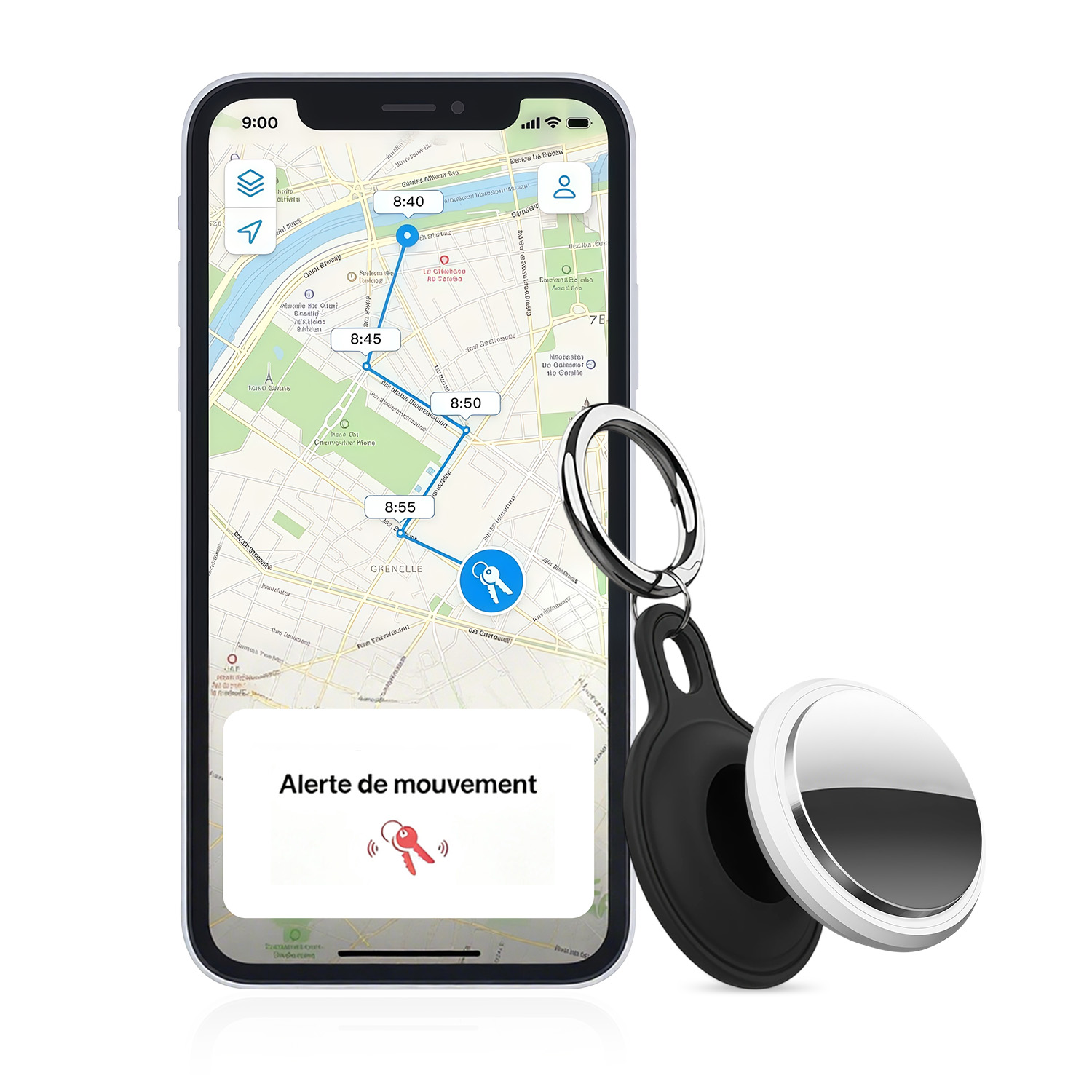
The Clorant Mini GPS Tracker has spent the last few months in my car, my carry-on and a utility trailer, and what it changes is simple: you stop wondering. It’s sold as a one-time purchase with no monthly subscription 📍, which in this category is the number that decides what a tracker really costs you.
You don’t have to watch a map to be covered. Geofencing draws a boundary around a driveway, a parking lot, a storage yard or a hotel, and movement and theft alerts push to your phone the moment something crosses it. Most days you never open the app at all, which is exactly how people actually live with one of these.
One tracker, whatever you’re worried about this week. It doesn’t plug into an OBD port, so it moves between a car, a trailer, a toolbox, a motorcycle or a suitcase with nothing to wire in — and it’s small enough to stay out of sight in every one of them.
Everyone in the house can see it. An iOS and Android app means nobody is locked out over which phone they happened to buy, and real-time location means what you’re looking at is where the thing is now, not where it was this morning. That distinction matters most on the one night it counts.
Whether you’re parking on the street overnight, leaving tools at a jobsite or handing a bag to an airline, this tracker’s one-time-purchase model is built around what you’ll pay across years rather than what you pay on day one. Set the boundary once, and let the alerts do the watching.
Pros
Sold as a one-time purchase with no monthly subscription
Real-time location straight to your phone
Geofencing draws a boundary anywhere you park or store something
Movement and theft alerts arrive when something crosses it
Works on both iOS and Android
No OBD port needed, so it isn’t tied to one vehicle
Small enough to stay out of sight in a bag or a trailer
Covers a car one week and a suitcase the next
Nothing to wire in and nothing to install
Set it once and leave the app closed
Cons
Occasionally out of stock due to strong demand
Delivery takes 1-2 days longer than major brands
THE RESULT
The Clorant Mini GPS Tracker stands out for the balance of reliability, simplicity and long-term value, combining real-time location and movement alerts with a one-time-purchase model and an app on both platforms. Its portability 🏆 and running cost justify a quick decision before peak-season stock runs out.

from BrickHouse
Overall Grade
B+
Rating
9.3/10
OVERALL ANALYSIS
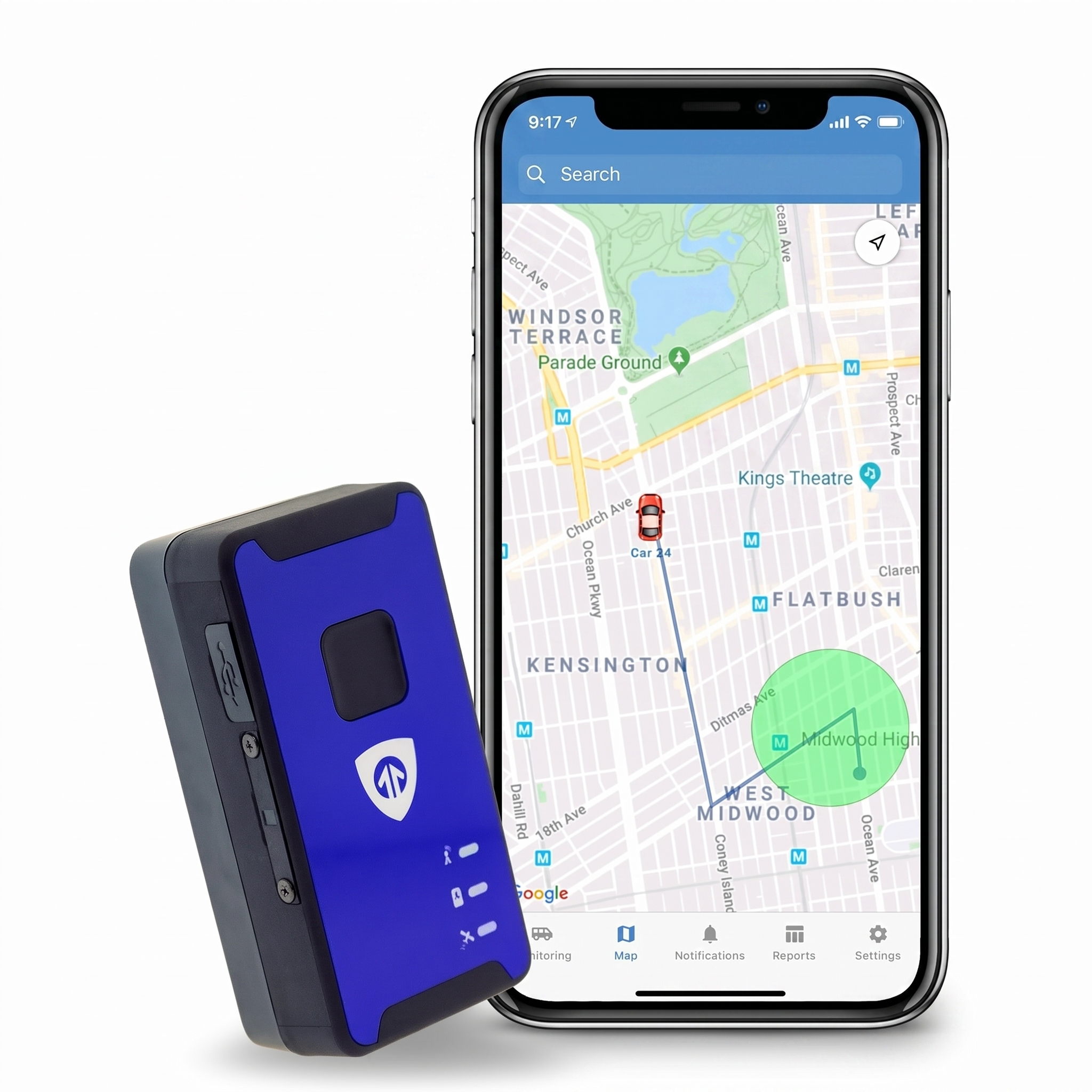
The BrickHouse GPS Tracker comes with a service behind it. 4G coverage across the U.S., Mexico and Canada 🛰️ arrives as a finished package — hardware, SIM and service together — rather than something you have to research and assemble yourself.
The tracking specs are clear. It ships with roughly a 1-minute update interval and the interval can be adjusted on request, with geofencing, speed alerts, location alerts and text alerts covering the day-to-day work.
It’s built to be carried. At 3.0 × 1.58 × 1.0 in it goes in a glovebox, a trailer or a bag, and it’s rated at 14 days standby, 7 days of average use or 14 hours of constant tracking. Support is one of this brand’s genuinely strong points.
The catch is in the wording and the app. The no monthly fee bundle is twelve months of prepaid service, not a permanent exemption, so the cost question comes back at the end of year one. The app is the weakest part of the experience: the interface takes learning, map behavior has gone backwards with updates, speed and geofence alerts don’t always arrive as configured, and stops can go missing from the history. Continuous tracking also drains it far faster than the standby figure suggests. It’s a strong buy for owners who want a mature North American service with real support behind it, as long as you plan for the renewal.
Pros
4G coverage across the U.S., Mexico and Canada
Hardware, SIM and service sold as one package
About a 1-minute update interval, adjustable on request
Geofencing, speed, location and text alerts
3.0 × 1.58 × 1.0 in, easy to hide or carry
14 days standby and 7 days of average use
Strong customer support behind the product
Cons
No monthly fee means twelve prepaid months, not forever
The app interface takes learning and has regressed with updates
Alerts don’t always arrive as configured

from Moto Watchdog
Overall Grade
B+
Rating
9.0/10
OVERALL ANALYSIS
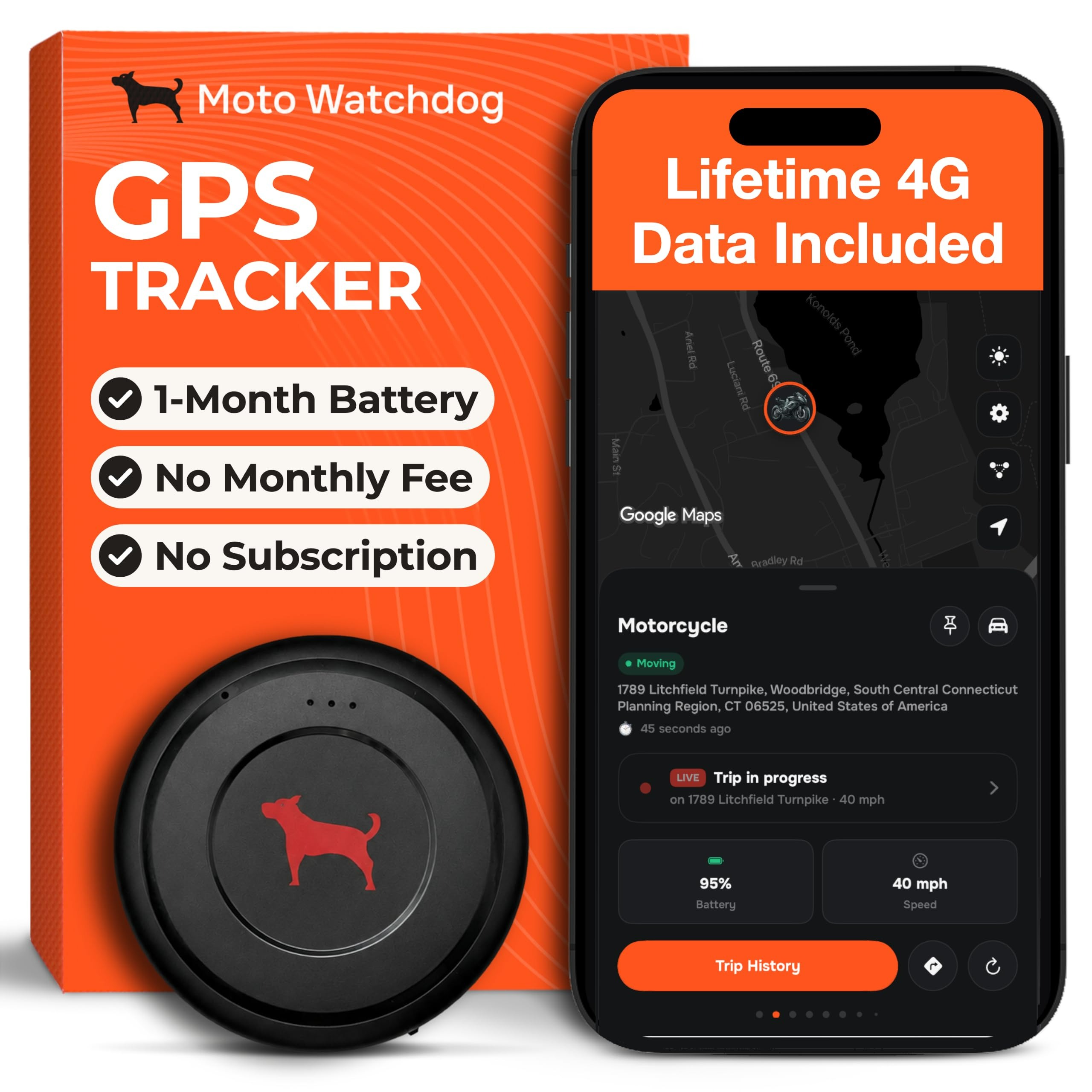
The Moto Watchdog GPS Tracker takes the same one-time-purchase route and spells out how it works. A built-in 4G LTE SIM with lifetime data included 📡 means there’s no plan to activate, no renewal date and no carrier to deal with.
The everyday specs hold up. A rechargeable battery runs up to a month on a charge, coverage is stated for 170+ countries, and real-time location sits alongside route history, geofences, curfews, speeding alerts and movement detection across a phone app and a web dashboard. You can also run several devices on one account, which matters once you’re covering a car, a trailer and a bike rather than one thing.
What you give up is time and reassurance. It’s a battery unit, so it comes off for charging roughly once a month — the plug-in version in the same family never needs it, but that one only works on a car with a port. The hardware warranty runs a year, shorter than some of the established names, and lifetime data is ultimately only as durable as the company standing behind it, which makes the current terms worth reading before you buy. The brand is also newer than most here, without the long service record that comes with age. It’s a good fit for owners who want no subscription and clear coverage in writing, as long as a monthly charge cycle fits your routine.
Pros
Built-in 4G LTE SIM with lifetime data included
Rechargeable battery runs up to a month per charge
Coverage stated for 170+ countries
Route history, geofences, curfews and speeding alerts
Several devices on one account
Phone app and web dashboard
Cons
Battery unit that comes off for charging about once a month
One-year hardware warranty, shorter than some rivals
Lifetime data is only as durable as the company behind it
Newer brand without a long service record

from Cube
Overall Grade
C+
Rating
8.6/10
OVERALL ANALYSIS
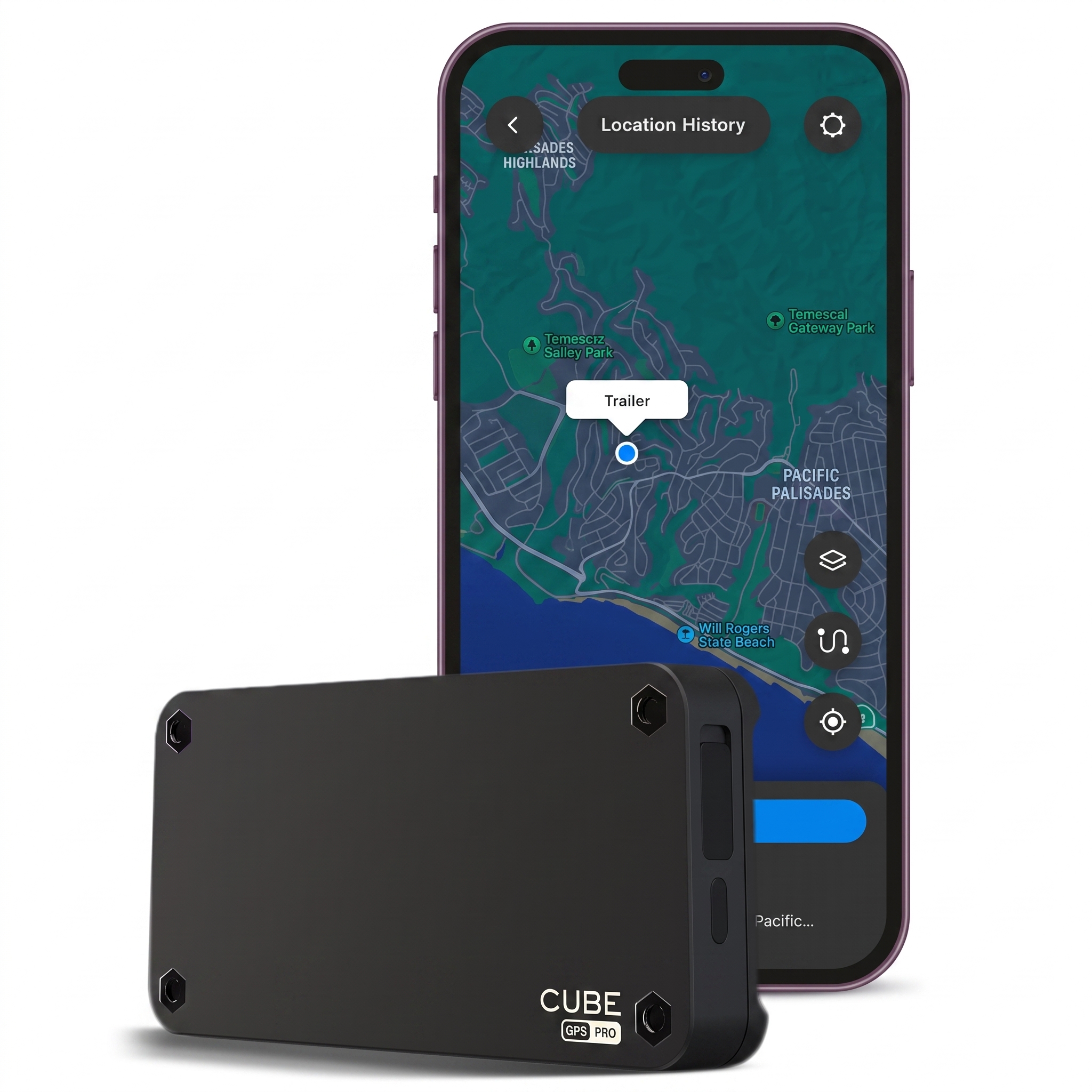
The Cube GPS Tracker is the one you can forget about. Its retail listing rates the rechargeable battery at up to 365 days at 10-minute update intervals 🔋, which changes what a tracker is for — you stop maintaining it and start just having it.
Installation takes seconds. A removable magnetic base sticks to any steel surface, so there’s no OBD port, no wiring and no interior panel to pull, and an optional hardwire charger covers permanent installs.
The tracking side is flexible. Update intervals adjust from 1 to 10 minutes with a separate live tracking mode, theft recovery and multiple geofences handle security, and it works with iOS and Android. Owners consistently single out accuracy, ease of use and magnet strength.
The costs and the gaps are what owners flag. A free trial converts to a recurring subscription, and people who like the hardware still find the ongoing service expensive. A 1-minute minimum interval can be slow when a vehicle is actively being driven away, live tracking doesn’t always start immediately and some report multi-minute reporting gaps, and connectivity and app or payment friction come up often enough to mention. Micro-USB rather than USB-C is a smaller recurring gripe. It’s a sensible pick for trailers, stored vehicles and equipment you don’t want to maintain, as long as an ongoing subscription is fine with you.
Pros
Rated up to 365 days at 10-minute update intervals
Removable magnetic base with no wiring or OBD port
Update intervals adjustable from 1 to 10 minutes
Theft recovery and multiple geofences
Optional hardwire charger for permanent installs
Widely owned, with consistently positive owner feedback
Cons
The free trial converts to a recurring subscription
Owners who like the hardware still call the service costly
A 1-minute minimum interval is slow for a vehicle in motion
Live tracking doesn’t always start immediately
Micro-USB rather than USB-C

Overall Grade
C
Rating
8.1/10
OVERALL ANALYSIS
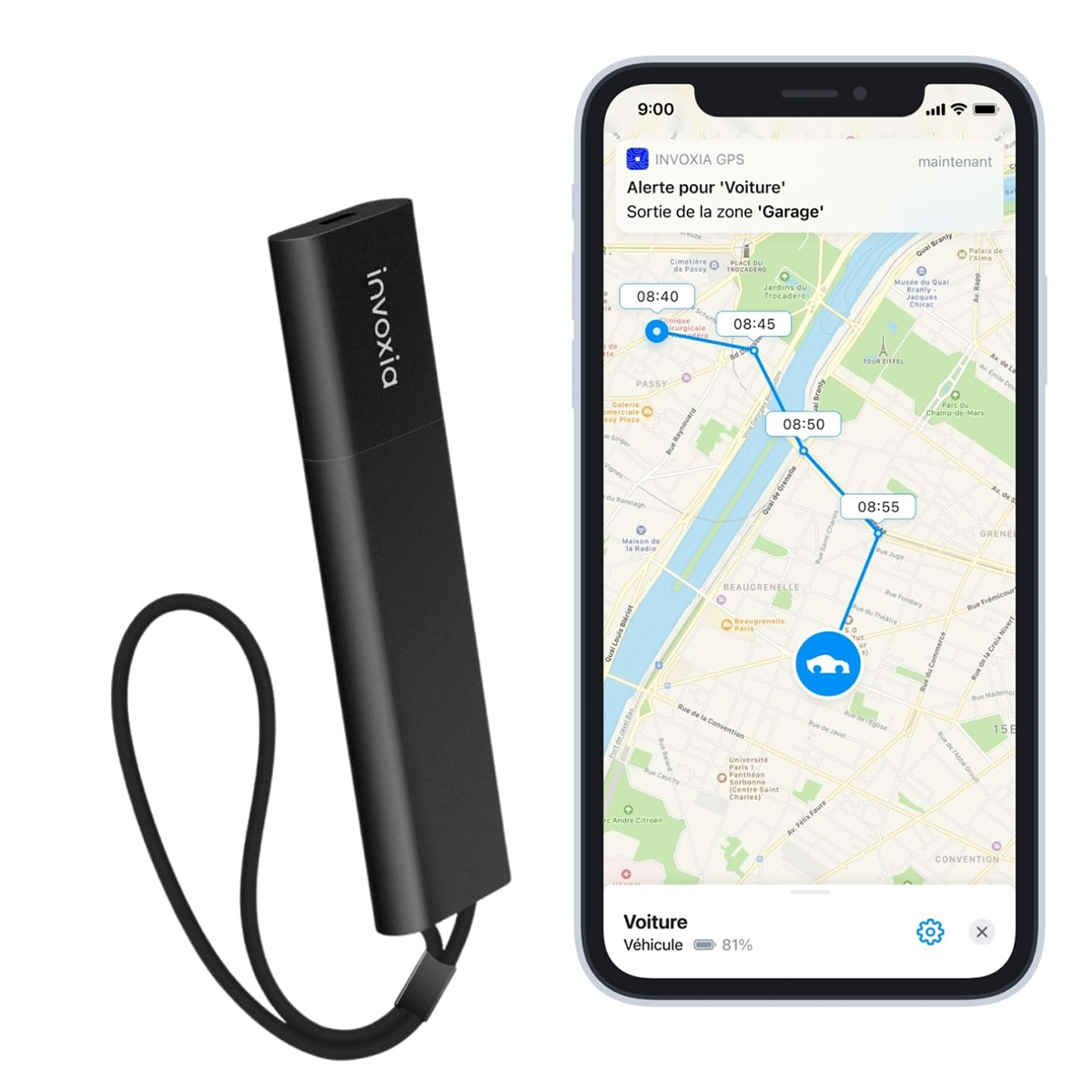
The Invoxia GPS Tracker is built around battery life. At 4 × 1 × 0.4 in and 1.05 oz it disappears into a glovebox, a fuel tank recess or the bottom of a bag 🏍️, and its tracking mode stretches a charge into months rather than days.
The alerting is unusually specific. Theft alerts fire when something stationary starts moving, a tilt alarm triggers past 30 degrees — the way a motorcycle goes over when someone tries to lift it — and geofences plus an on-device SOS button round it out.
The network side is handled for you. A built-in SIM on 4G LTE-M ships with a multi-year subscription included, Wi-Fi positioning covers indoors, update rates run at 5, 10 or 30 minutes, and a full charge takes about an hour.
Its limits are geographic and periodic. Coverage stops at the continental U.S. and Hawaii — no Canada, no Mexico, nothing overseas. Reporting is periodic rather than continuous, and the faster you set it the harder the battery falls, so the headline months come from the slowest mode. IP33 covers knocks and ordinary outdoor conditions rather than rain running down a trailer frame, and the included subscription becomes an annual renewal once it runs out. It’s a reasonable pick for motorcycles, bags and equipment where months between charges matter more than minute-by-minute updates, as long as it never has to cross a border.
Pros
Battery stretches to months per charge in low-frequency mode
Tilt alarm and real-time theft alerts, plus an on-device SOS button
Built-in SIM on 4G LTE-M with a multi-year subscription included
4 × 1 × 0.4 in at 1.05 oz, easy to hide almost anywhere
Cons
Coverage is limited to the continental U.S. and Hawaii
Reporting is periodic at 5, 10 or 30 minutes, not continuous
Battery life falls sharply at the faster update rates
IP33 covers knocks and light conditions, not rain exposure
The included subscription turns into an annual renewal
❓What Is a GPS Tracker?
A GPS tracker is a small device that reports where it is, so you can see the location of a vehicle, an asset or a bag from your phone. It does two separate jobs, and most listings only talk about the first: it works out its position from satellites, then sends that position over a cellular network to an app you can open anywhere. A Bluetooth tag is a different thing entirely — it has no cellular link and depends on other people’s phones passing nearby, which works in a busy airport and not on a rural road at 3 a.m.
No monthly fee is the most slippery phrase in the category, and it covers at least three different arrangements. It can mean twelve months of service prepaid at purchase, with the cost returning at renewal. It can mean an annual plan rather than a monthly one. Or it can mean a free trial that converts to a subscription. Before buying, the question worth asking is not whether there’s a monthly bill, but what you’ll pay in year two and year three.
Update interval and battery life are two ends of the same trade, and the headline numbers usually come from opposite ends of it. A tracker rated for a year of battery is normally reporting every ten minutes; the same device in live mode may last days. Read the two figures together, and check whether a stated sample rate is what the device measures or what your phone actually receives — those can differ by a factor of three.
Two more practical points. Placement decides reception: metal enclosures, deep concealment and underground parking all weaken GPS and cellular signal, so the best-hidden spot is often not the best-performing one. And tracking law varies by state — these devices are for your own vehicles and property, and putting one on someone else’s car or tracking another adult without their knowledge can be illegal where you live.
🎯 Key Features & Advantages: GPS Trackers
You Stop Guessing Where It Is: One look at the app answers the question, whether it’s a car, a trailer or a bag that didn’t arrive.
A Stolen Vehicle Still Leaves a Trail: A tracker doesn’t prevent theft, but it turns a report into a location the police can act on.
Alerts Replace Checking: A geofence means you go about your day and hear from it only when something actually moves.
Everything Outside Overnight Gets Covered: Trailers, tools, motorcycles and equipment sit unprotected in a way a parked car usually doesn’t.
Lending the Car Gets Easier: You know when it arrived and when it came back without calling to ask.
Travel Stops Being a Leap of Faith: A tracker in a checked bag tells you where it is while the airline is still looking it up.
History Explains What Happened: A trip record settles questions about when something moved and where it went.
One Device Covers Several Things: A tracker that isn’t wired in can follow whichever asset needs watching that month.
🔍 Smart Buying Guide: GPS Trackers
Price Out Year Two, Not Just Year One: Add up hardware plus service for three years before comparing anything on sticker price.
Read the Fee Wording Carefully: Prepaid, annual renewal and post-trial subscription are three different things sold under one phrase.
Ask How Position Gets to Your Phone: Real-time tracking needs a cellular link, so find out what network and what data arrangement it uses.
Match Update Interval to the Threat: A ten-minute interval is fine for a parked trailer and slow for a car being driven away.
Check Battery at Your Interval: A year-long rating usually assumes the slowest reporting mode, not the one you’ll actually use.
Portable or OBD: A plug-in tracker never needs charging but can only ever watch a vehicle with a port.
Plan the Placement Before You Buy: Deep metal concealment and underground parking cost you signal, so think about reception as well as hiding.
⚠️ Smart Shopper Alert: GPS Trackers
Reading No Monthly Fee as No Future Cost: Prepaid service periods and annual renewals both use that phrase and both come back around.
Confusing a Bluetooth Tag With a Cellular Tracker: A tag depends on other people’s phones being nearby and behaves nothing like a 4G device.
Taking a Sample Rate as a Refresh Rate: A device may measure every 20 seconds and still send your phone one point a minute.
Buying the Longest Battery Without Reading the Interval: Year-long ratings assume slow reporting, and live tracking changes the math completely.
Assuming Any Tracking Is Legal: State laws differ on tracking vehicles and people, and these belong on your own property or with clear consent.
By Wes Holloway
Wes Holloway is a seasoned Location Technology Analyst with years of experience testing over 28 GPS trackers. Specializes in independent reviews that help people choose accurate, dependable tracking for vehicles, assets and everyday belongings.