In-Depth Product Analysis for Informed Consumer Choices

Best 5 Bidet Attachments for Toilets of 2026
A Cleaner Routine Without an Outlet or a Plumber
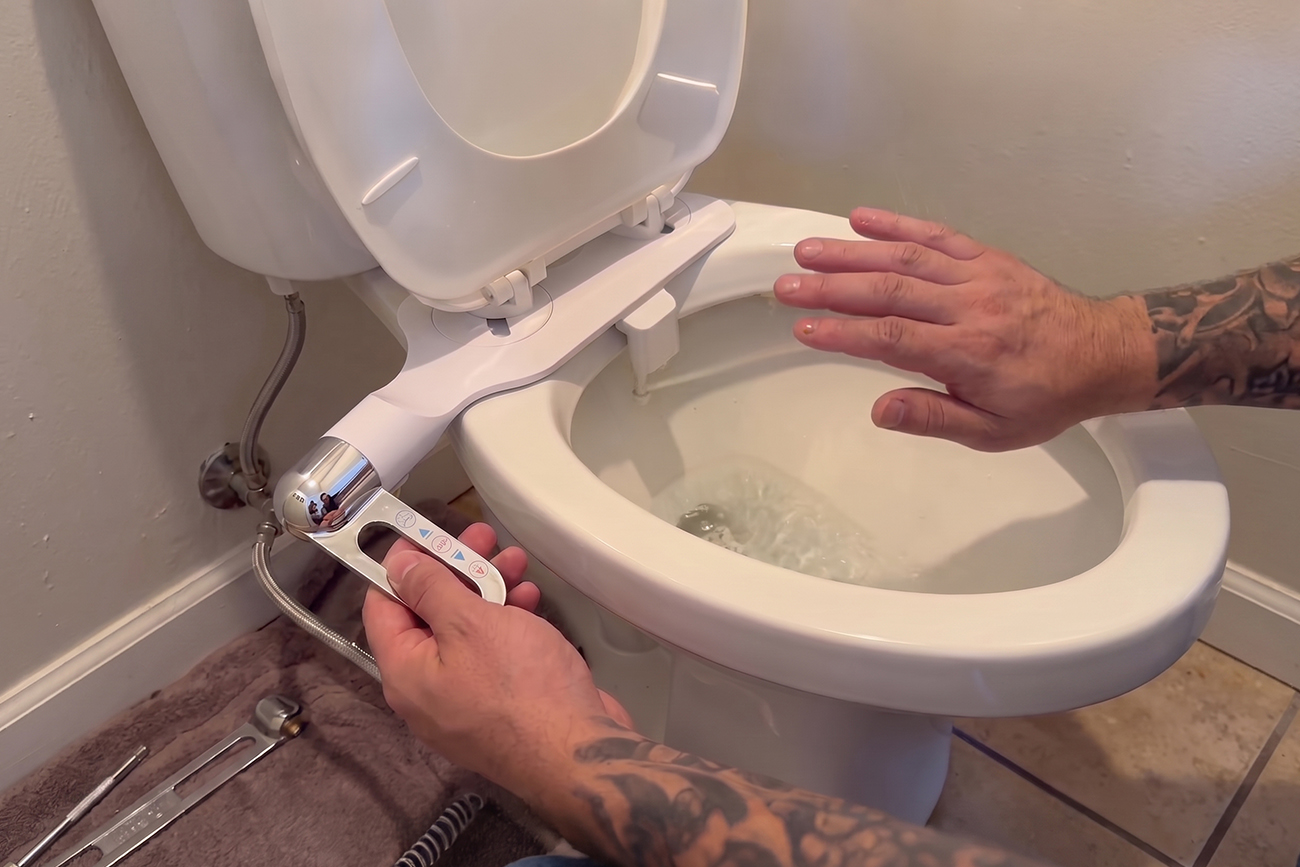
Picture this: it’s a weekday morning, you’re already behind, and you’re wondering why toilet paper 🧻 alone never quite finishes the job. I’ve been there — I bought my first bidet on a whim, snugged the fittings up by hand, and found a damp ring on the tile two weeks later. The unit worked fine. The connection didn’t.
Most first-time buyers don’t realize how much seat height, nozzle layout, and the metal behind each connection decide whether an attachment becomes part of the bathroom or a project you regret. Buy on feature count alone and you get a seat that rocks every time you sit down ⚠️, or a plastic knob that weeps onto the floor while you’re at work. The right one disappears into the toilet you already own.
After testing more than 31 attachments, the one that solved the most of those problems at once is the Clorant Bidet Attachment for Toilet. Its body measures 1/4 in (6mm) thick 📏, so the seat comes back down close to where it started, and two separate nozzles handle rear and feminine washing instead of one you tilt and hope.
This guide cuts through the universal fit language to what actually decides whether an attachment works on your toilet. You’ll learn why a warm-water model needs a hose run to the sink 🔧, and why self-cleaning describes the nozzles and not the plate they sit on. We’ve also flagged what to watch for: units thick enough to lift the seat, and fittings that hold pressure for a season and then start to seep.
Whether you’re upgrading a primary bathroom or setting up a guest bath before the holidays, our top 5 bidet attachments represent the best value across cold-water and warm-water designs. Let’s dive into what separates these five from the cheapest attachment in the search results.

By Naomi Kessler
Naomi Kessler is a seasoned Bathroom Fixtures Analyst with 3+ years of experience testing over 31 bidet attachments and seats. Specializes in performance evaluation of non-electric bidets that install without rewiring or replumbing a bathroom.
Our Evaluation Standards
How It Sits on Your Toilet
Measured how far each one lifts the seat, and whether the seat still sits flat and steady afterward
What the Spray Actually Does
Evaluated whether rear and front washing get their own nozzles, or one nozzle you have to angle two different ways
Parts That Hold Water
Assessed the fittings, hose and valve behind every connection, because a slow leak is the failure that costs you real money
Install and Everyday Cleaning
Tested how long a first install takes with basic tools, and how easily the unit lifts or opens for wiping underneath

from Clorant
Overall Grade
A+
Rating
9.6/10
OVERALL ANALYSIS
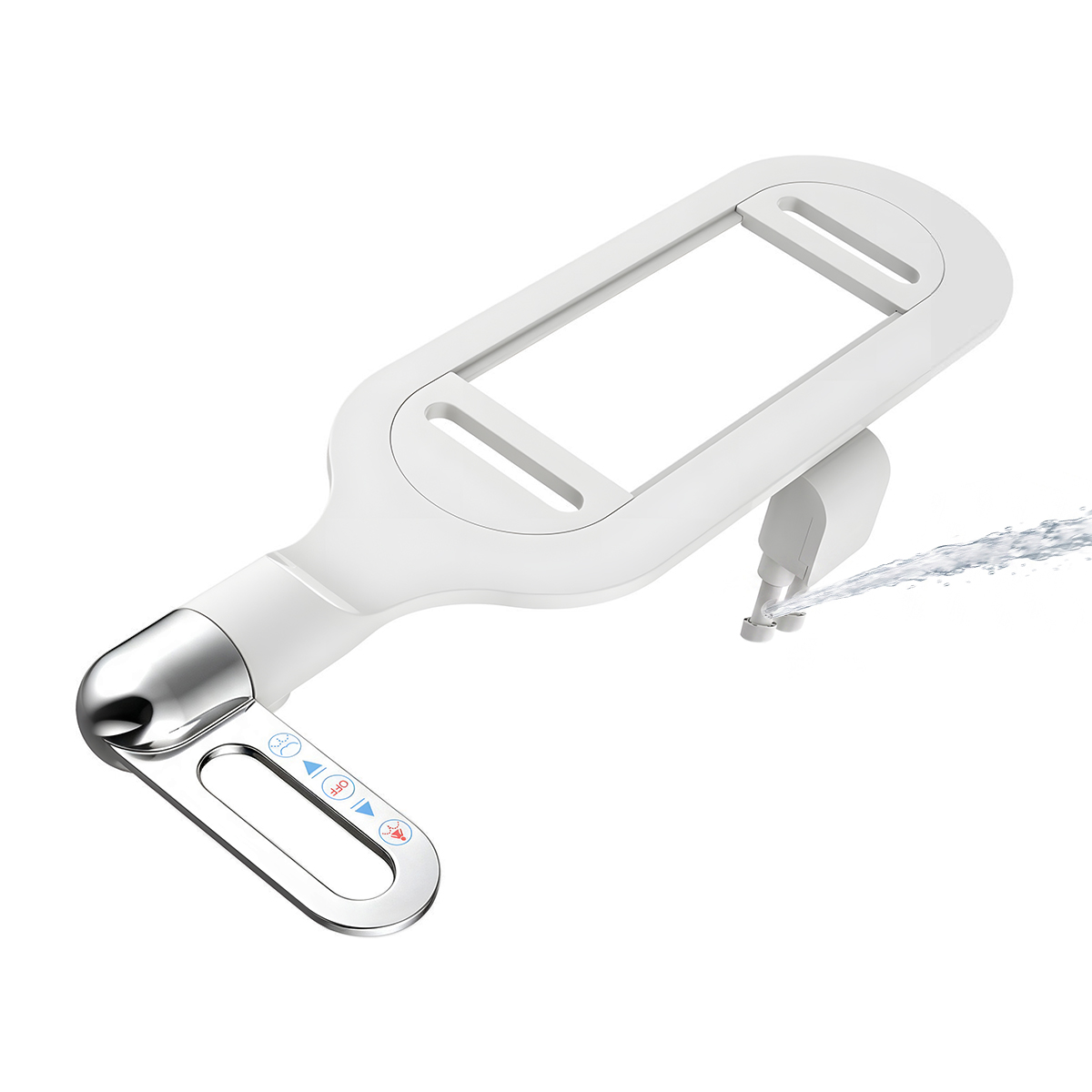
Your toilet seat comes back down almost exactly where it started. The Clorant Bidet Attachment for Toilet sits between the bowl and the seat at 1/4 in (6mm) thick 🚽, thin enough that the seat still meets the bowl instead of perching on a plastic ledge — no gap at the hinge, no rocking when someone sits down, and nothing that changes how the toilet feels to use.
Nobody has to negotiate with one nozzle doing two jobs. Rear wash and feminine wash each get their own dedicated nozzle, so moving between them is a turn of the side knob rather than a shift in how you’re sitting. Both pull back behind a protective cover between uses and rinse themselves before and after every wash, which is what you want in a bathroom two people share.
You won’t be checking the floor behind the toilet every few weeks. Solid brass fittings and a metal-braided supply line 🔩 sit at the places that hold pressure, rather than molded plastic and bare tubing, and the unit is rated for supply pressure from 20 to 80 PSI — the range most homes deliver. A side knob takes the spray from a trickle up to full, so the first use isn’t a surprise.
The roll on the wall starts lasting a lot longer. Once water is doing the cleaning, paper is only there to dry off — a few squares instead of a fistful — and for a household that has been going through the big pack every couple of weeks, you notice it on the shopping list inside a month.
Whether you’re adding a bidet for the first time or replacing one that started dripping, this attachment goes onto a standard two-piece toilet with basic hand tools and the hardware in the box 🛠️. There’s no outlet to find, no hot-water line to run across to the sink, and no plumber standing in your bathroom on a Saturday — it taps the water line already behind your toilet and leaves everything else where it is.
Pros
Ultra-thin 1/4 in (6mm) body keeps the seat sitting flat
Separate rear and feminine nozzles, switched at the knob
Self-rinsing nozzles retract behind a protective cover
Solid brass fittings at every water connection
Metal-braided supply line built to hold pressure
Knob-adjustable spray, rated for 20 to 80 PSI
Runs on water pressure alone, no outlet or GFCI
Single supply hookup, no hot-water line to run
Fits standard two-piece toilets, hardware included
Cuts toilet paper down to a quick dry-off
Cons
Occasionally out of stock due to strong demand
Delivery takes 1-2 days longer than major brands.
THE RESULT
The Clorant Bidet Attachment for Toilet stands out as 2026’s most complete first bidet for an ordinary bathroom, pairing a 1/4 in (6mm) body that leaves the seat sitting flat with separate rear and feminine nozzles and metal where the water connects. Its no-outlet, single-line install 🏆 makes this an easy decision before peak-season stock runs out.

from TUSHY
Overall Grade
B+
Rating
9.3/10
OVERALL ANALYSIS
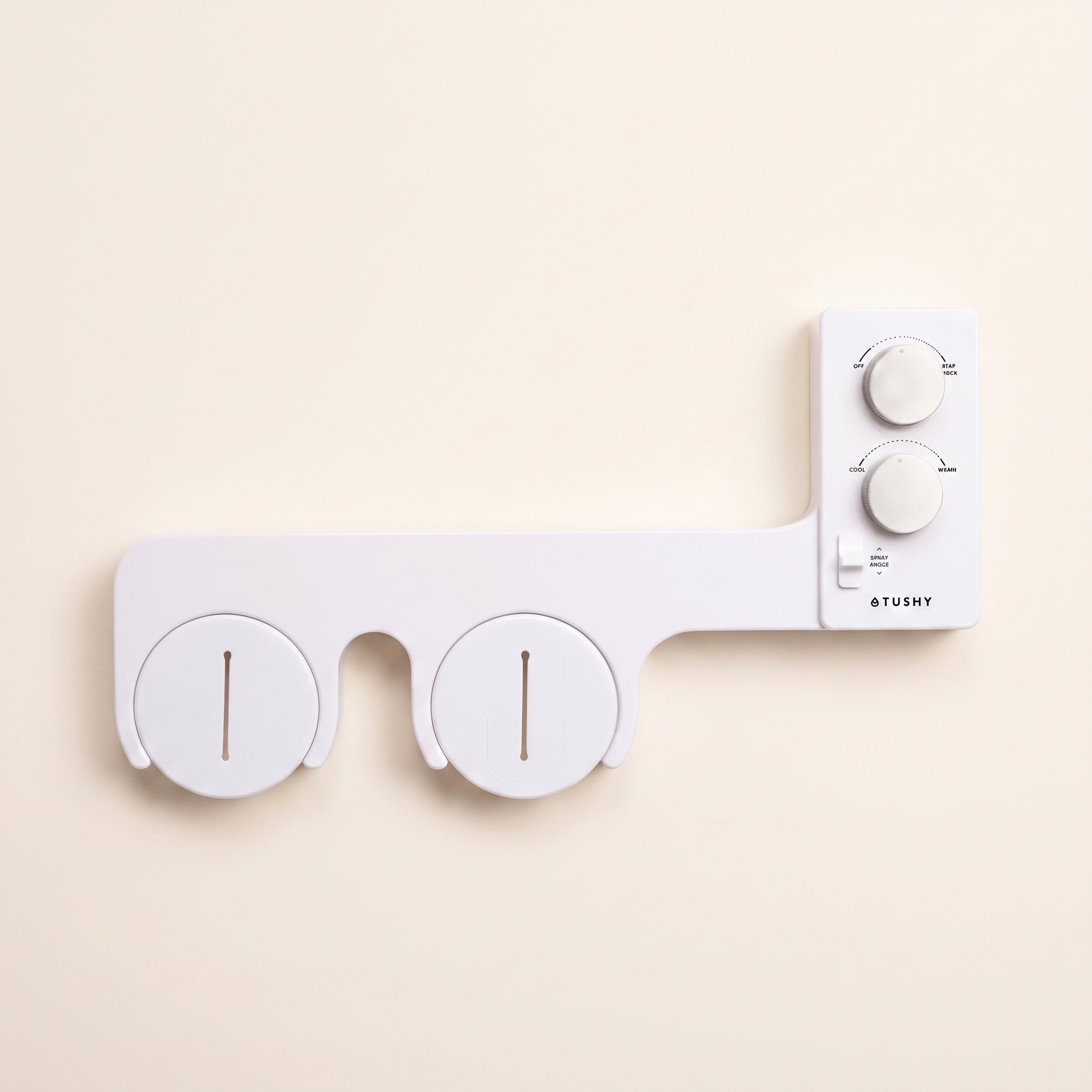
The TUSHY Spa 3.0 is the one to look at if cold water is the thing holding you back. It runs on household water pressure with no outlet required, then adds a temperature dial and a hose that taps the hot line under your bathroom sink.
The rest of the hardware is straightforward: a single retractable nozzle that rinses itself, a precision adjuster for aiming it front or back, and a unit measuring about 16 × 9 × 3.5 in at roughly 2 lb 🛁. The 6-ft hot-water hose for the sink connection comes in the box.
Temperature gets set at the unit rather than at the tap. A dial blends the cold feed with the hot line you’ve run, so the spray arrives at whatever temperature you dialed in instead of whatever the pipes happen to be holding that morning.
What warm water costs you is a second water line. The hose has to reach a sink, so your bathroom layout decides whether the feature works at all, and owners report leaks at the hot-water connection, the O-ring and the fittings — a failure point cold-water models simply don’t have. Pressure is also hard to bring down far enough. Owners describe the gentlest setting as still landing harder than they want, and some fit a reduction insert to tame it. Nozzle travel doesn’t reach everyone without moving on the seat. It’s a strong buy for anyone who dreads cold water, as long as your sink sits close enough to keep the plumbing simple.
Pros
- Adjustable warm water from a temperature dial
- Warm water with no electrical hookup at the toilet
- Self-cleaning nozzle that rinses and retracts
- Precision adjuster aims the spray front or back
- 6-ft hot-water hose included for the sink connection
- About 2 lb, easy to hold while you tighten the fittings
- Published 16 × 9 × 3.5 in footprint
Cons
Warm water needs a second line run to a nearby sink
Leaks reported at the hot-water connection and O-ring
Gentlest pressure setting still lands hard for some

from TUSHY
Overall Grade
B+
Rating
9.0/10
OVERALL ANALYSIS
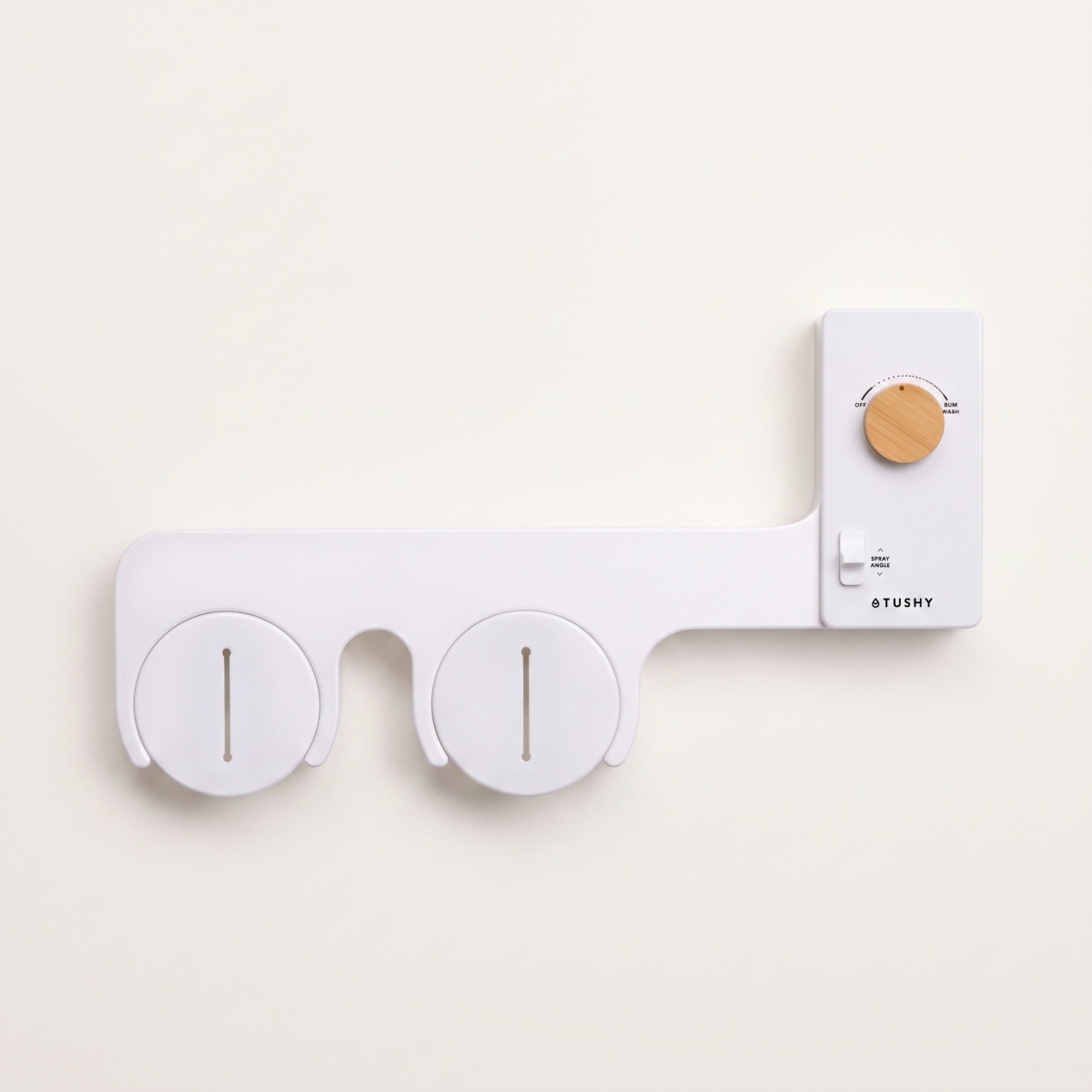
The TUSHY Classic 3.0 is the straightforward first purchase. It’s the cold-water version of the same hardware — one self-cleaning retractable nozzle, an angle adjuster to aim it, a tank adapter and a flexible steel hose 🧰 — with nothing to plug in anywhere near the toilet.
One nozzle is doing two jobs here. Front and rear washing come from the same spray head at different angles, so going from one to the other means moving the adjuster rather than picking a different setting, and how far the nozzle travels depends on the shape of your toilet rim — some installs need the unit pushed forward. TUSHY publishes a working pressure window of about 45 to 55 PSI, so at least you can check your supply against a number.
Fit is the other thing to plan for. TUSHY’s own support pages cover water pressure arriving too strong, a seat that no longer sits flush and a seat that wiggles, which is a fair map of what comes up after install. Cold water takes getting used to as well, particularly in a bathroom that runs cold for half the year. It’s a good fit for a first-time buyer who wants a simple cold-water fit and an adjustable spray angle, as long as one nozzle covering both washes suits your household.
Pros
Cold-water, non-electric design with nothing to plug in
Self-cleaning nozzle that rinses and tucks away
Angle adjuster aims the spray to suit your seating
Tank adapter and flexible steel hose included
Published working range of 45 to 55 PSI
About 2 lb at 16 × 9 × 3.5 in
Cons
One nozzle covers both washes, no dedicated front spray
Nozzle reach depends on the shape of your toilet rim
Seat flush and wiggle issues covered in brand support
Cold water only, and it takes getting used to

from LUXE Bidet
Overall Grade
C+
Rating
8.6/10
OVERALL ANALYSIS
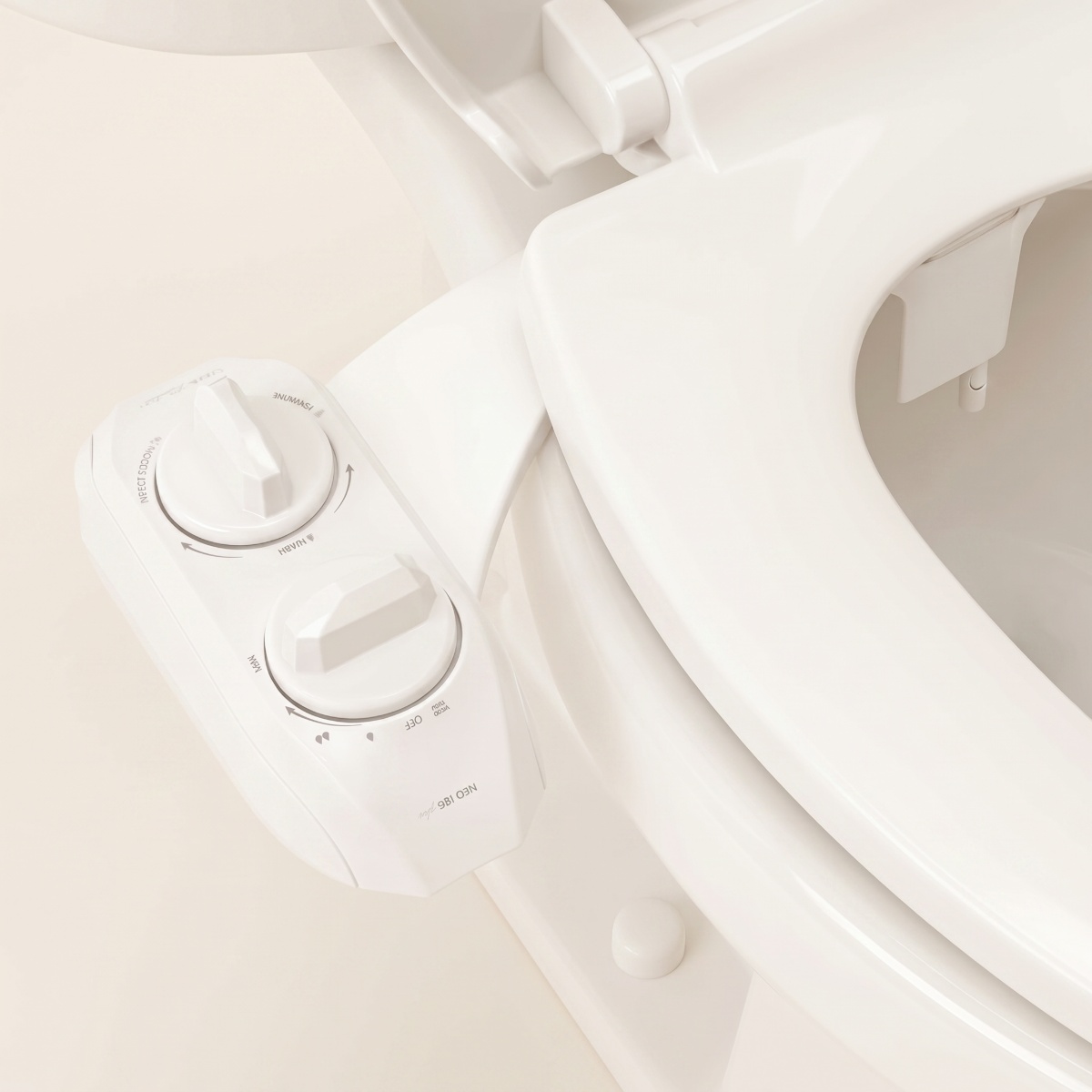
The LUXE Bidet NEO 185 Plus puts two nozzles at the low end of the price range. Rear and feminine washing are separate settings here, on a cold-water mechanical body that slides into place without tools.
Its EZ-Lift hinge is the piece worth paying attention to. The whole attachment tips up off the bowl so you can wipe underneath it 🧽, which handles the part of bidet ownership no listing photo shows you: the ring of grime that collects under the plate.
The rest is sensibly specified. A 360° self-cleaning mode rinses the nozzles, a guard gate covers them between uses, the fittings are standard 3/8-in, and the warranty runs 18 months with an extension available when you register the unit.
Fit is where the owner reports pile up. People describe the seat pressing down on the attachment and spray alignment that only comes right after adding spacers, and some say the feminine and rear positions sit close enough together that they still move on the seat to aim. There are scattered reports of cracking at the attachment point and around the body, and an older shut-off valve or a rigid supply line can turn a slide-in install into a trip to the hardware store. It’s a sensible pick for a budget-first buyer who cares about cleaning under the unit, as long as you’re willing to shim it into alignment.
Pros
Dual nozzles with a separate feminine setting
EZ-Lift hinge tips the unit up for wiping underneath
360° self-cleaning mode with a protective guard gate
Standard 3/8-in fittings
18-month warranty, extendable at registration
Cons
Seat can press on the unit, sometimes needing spacers
Spray alignment often needs shimming to line up
The two spray positions sit close together
Scattered reports of cracking at the attachment point
Cold water only, with no warm option

from Brondell
Overall Grade
C
Rating
8.1/10
OVERALL ANALYSIS
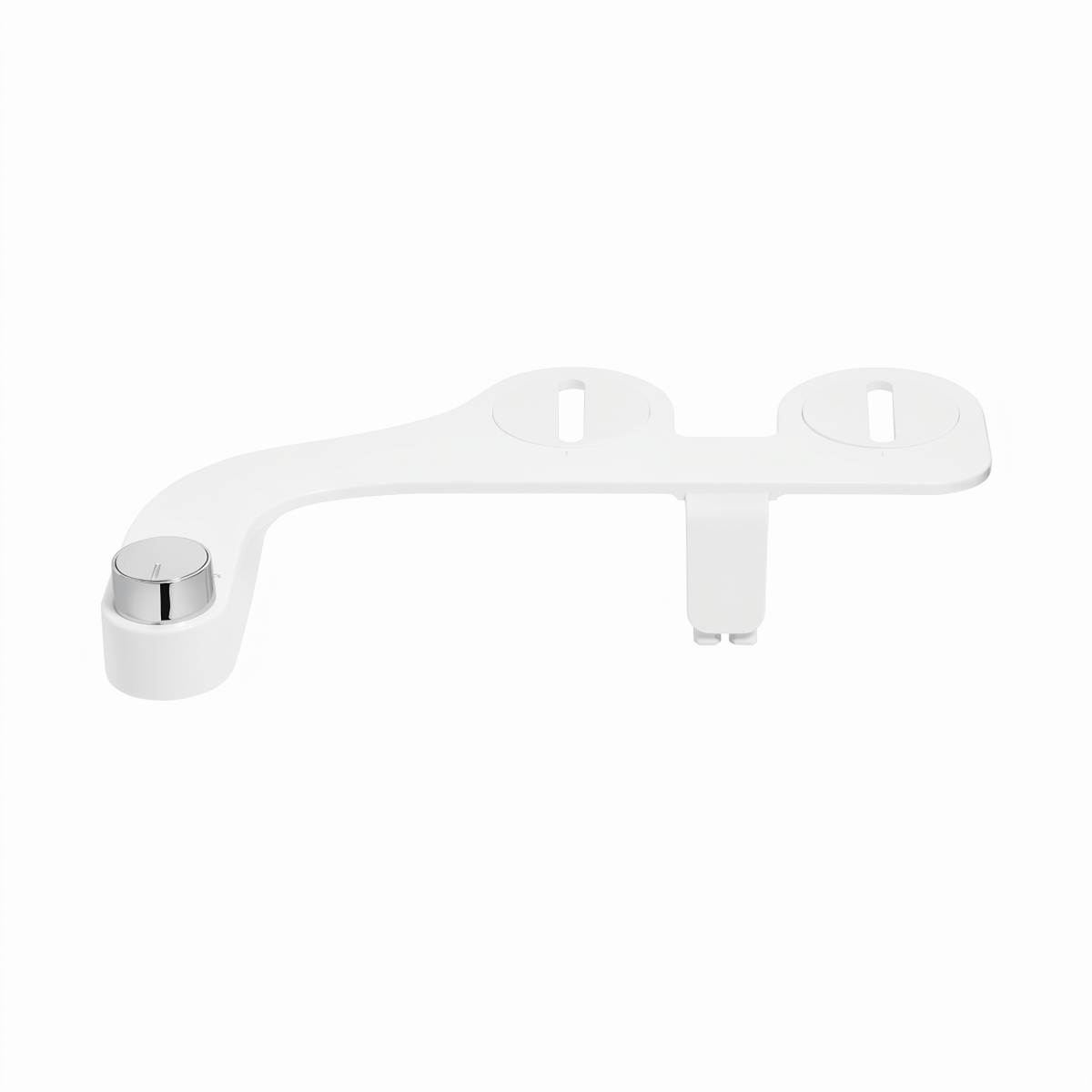
The Brondell FreshSpa Comfort+ FSR-15 is the entry point that still gives you two nozzles. Front and rear washing are separate here, on an ambient-temperature body that needs no power at all.
The spec sheet is unusually specific for the price. Brondell publishes a supply pressure range of 20 to 100 PSI, lists the unit at 10.5 × 15.5 × 3 in and 0.6 lb (0.27 kg) ⚖️, and names what’s inside rather than leaving the materials vague.
Two of those materials matter. A braided metal hose and a ceramic internal valve sit at the points that carry pressure day after day, and the nozzles retract behind a hygienic guard when they’re not in use.
The recurring complaint is water where it shouldn’t be. Leaks around the control knob and the body come up repeatedly in owner reviews, and some owners re-seal connections with Teflon tape to finish an install that ran longer than the video suggested. Others describe the plastic as looking and feeling more basic than the toilet it’s bolted to, in a white that doesn’t quite match, and spray trajectory that needed the unit repositioned before it landed right. Cold water is the only option here. It’s a reasonable pick for a tight budget on a known brand, as long as you check every connection after install and again the next day.
Pros
- Separate front and rear nozzles at an entry price
- Published supply range of 20 to 100 PSI
- Braided metal hose and ceramic internal valve
- 0.6 lb (0.27 kg), very little weight on the seat bolts
Cons
- Leaks around the control knob are the top complaint
- Install can run long and need Teflon tape to re-seal
- Plastic finish and white tone look basic
- Spray trajectory needs the unit repositioned for some
- Cold water only, with no way to add warm
❓What Is a Bidet Attachment?
A bidet attachment is a thin plate that mounts between your toilet bowl and the seat you already own, taps the water line feeding the tank, and sprays clean water where toilet paper otherwise does the work. It isn’t a replacement seat and it isn’t an electric bidet. Nothing plugs in, and the toilet stays exactly where it is.
The most misread word in the category is universal. Almost every attachment uses it, and what it means is that the mounting hardware fits standard toilets, usually two-piece bowls with a conventional seat. One-piece, skirted and round bowls are where fit questions start, and a seat that suddenly rocks or leaves a gap at the hinge is usually a thickness problem rather than a defect.
Read self-cleaning the same way. It describes nozzles that rinse themselves before and after a wash. It does not describe the base plate, the guard or the underside of the seat, all of which still collect what bathrooms collect. Whether the unit lifts or opens for wiping matters more over a year of ownership than the number of spray modes on the dial.
Two more things worth knowing. Using less toilet paper is not the same as using less water, since an attachment trades one for the other, so treat paper savings as the honest claim. And if you’re recovering from surgery, managing hemorrhoids, pregnant, or dealing with sensitive skin or any condition affecting the area, talk to your doctor about water pressure and temperature before you build a bidet into your routine.
🎯 Key Features & Advantages: Bidet Attachments
Nothing to Plug In: A mechanical attachment runs on household water pressure, so no outlet or GFCI is needed beside the toilet.
Your Toilet Stays Your Toilet: The plate mounts under the seat you already own, with no replacement seat and no bowl to swap out.
A Seat That Still Sits Flat: A thin profile keeps the seat close to the bowl instead of lifting it onto a plastic ledge.
Separate Rear and Feminine Washing: Two nozzles handle two jobs, so nobody has to change position to redirect a single spray.
Pressure You Control: A side knob takes the spray from a trickle up to full, which matters most on the very first use.
Nozzles That Rinse and Retract: Spray heads clean themselves and pull back behind a cover between uses in a shared bathroom.
Metal Where the Water Connects: Brass fittings and a braided supply line hold pressure better than molded plastic and bare vinyl tubing.
Paper Becomes Drying, Not Cleaning: Most owners keep a roll on the wall and go through a fraction of what they used to.
🔍 Smart Buying Guide: Bidet Attachments
Check Your Toilet First: Confirm whether the bowl is two-piece, one-piece or skirted, and look at the space behind the seat bolts.
Measure the Profile: Thickness decides how far the seat lifts, and a lifted seat is what starts rocking and gapping at the hinge.
One Nozzle or Two: Decide whether your household needs a dedicated feminine wash, or an adjustable single nozzle covers it.
Look at the Fittings and Hose: Brass, ceramic and braided metal at the connections outlast molded plastic and bare vinyl tubing.
Cold Water or a Hot-Water Run: Warm models need a hose to a nearby sink, so measure that distance before you commit to one.
Ask How It Cleans: Find out whether the unit lifts or the guard comes off, because self-cleaning only ever covers the nozzles.
Start Low on Pressure: Home water pressure varies widely, so plan to open the knob slowly for the first several uses.
⚠️ Smart Shopper Alert: Bidet Attachments
Trusting Universal Fit: It means standard hardware, not every toilet, and one-piece and skirted bowls are where the problems start.
Opening the Knob All the Way: Household pressure varies enough that a first full-pressure spray becomes a memorable mistake.
Skipping the Leak Check: Wrap each connection in a dry paper towel after install, then look again twenty-four hours later.
Reading Self-Cleaning as Never-Cleaning: The nozzles rinse themselves; the plate, the guard and the seat underside still need a wipe.
Underestimating a Warm-Water Install: A hot-water model needs a line run to the sink, and cabinets and distance both add work.
By Naomi Kessler
Naomi Kessler is a seasoned Bathroom Fixtures Analyst with 3+ years of experience testing over 31 bidet attachments and seats. Specializes in performance evaluation of non-electric bidets that install without rewiring or replumbing a bathroom.