In-Depth Product Analysis for Informed Consumer Choices

Best 5 Blood Pressure Watches of 2026
Daily Readings Without Digging Out the Arm Cuff
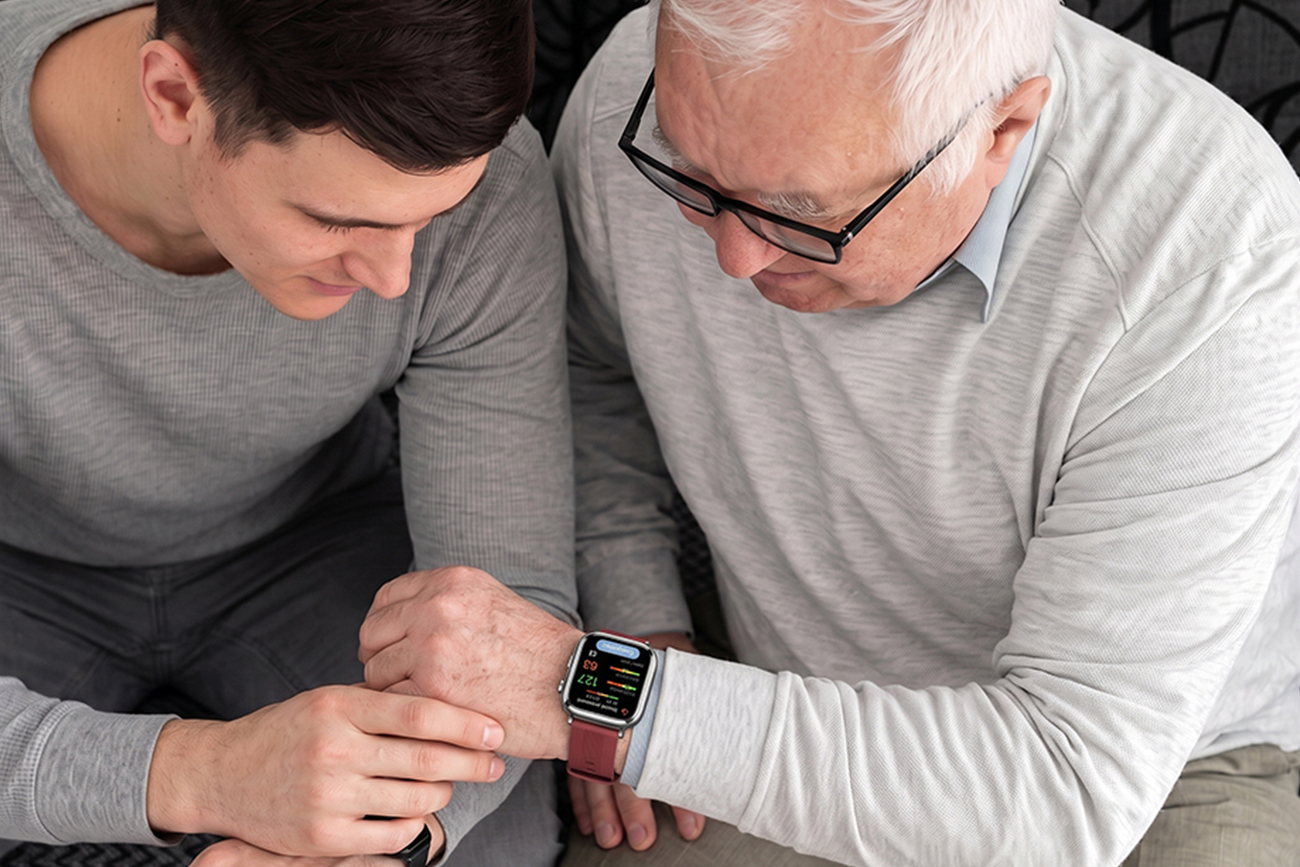
Picture this: your doctor tells you to keep an eye on it at home, so you buy the arm cuff. Three weeks later it’s still in the closet, and the only number either of you has is the one taken in the office. 🩺 I’ve been there — a reading nobody takes is a reading nobody can use.
Most people don’t realize how much how the reading is taken, how easy it is to read, and how many steps stand in the way decide whether a blood pressure watch gets used twice a day or twice a month. Buy on a long feature list alone and you get a watch that estimates rather than measures ⚠️, or one that still needs an arm cuff every 28 days. A reading you skip is worth nothing.
After testing more than 26 wearables, the one that removed the most steps is the Clorant Blood Pressure Watch. It carries a real inflatable cuff inside the strap 🩺 and takes an oscillometric reading right there on your wrist, so the whole routine is sit down, hold still, press once. That’s the difference between a habit and an intention.
This guide cuts through the spec sheets to what decides your morning. You’ll learn why an optical estimate and a cuff measurement are not the same thing 📊, and why a watch that re-calibrates every 28 days still keeps an arm cuff in your closet. We’ve also flagged what to watch for: IP ratings read as swim ratings, and 24-hour tracking that isn’t what it sounds like.
Whether you’re building a record before a check-up or setting a parent up with something they can actually operate, our top 5 blood pressure watches represent the best value across cuff-in-the-strap and companion-cuff designs. Let’s dive into what separates these five from the monitor in your closet.

By Elaine Ruiz
Elaine Ruiz is a seasoned Home Health Device Analyst with 2+ years of experience testing over 26 blood pressure monitors and wearables. Specializes in performance evaluation of at-home blood pressure tracking for older adults and family caregivers.
Our Evaluation Standards
Steps to a Reading
Evaluated how much has to happen between deciding to measure and having a number, including anything you still keep in a drawer
Accuracy and Reliability
Tested what each reading is actually based on, what measurement specs the maker publishes, and how repeatable results were across arm position and strap tightness
Readability and Accessibility
Assessed display size, voice feedback and one-button operation for someone who doesn't want to learn an app
Living With It Daily
Measured battery, wrist fit range, water limits, and how easily the record leaves the device for a clinician

from Clorant
Overall Grade
A+
Rating
9.6/10
OVERALL ANALYSIS
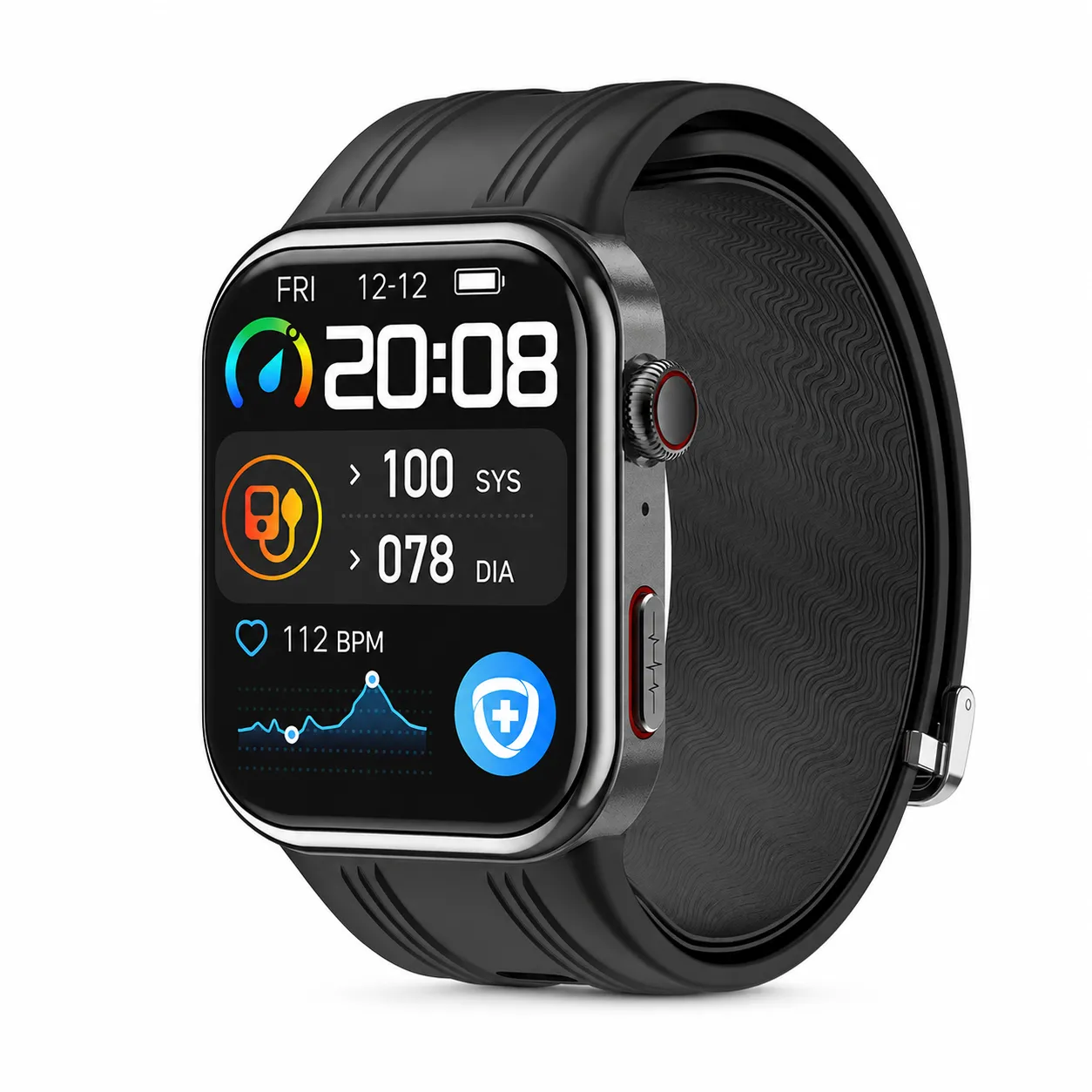
The Clorant Blood Pressure Watch keeps the cuff on your wrist, so you stop skipping readings. An inflatable airbag sits inside the strap and reads by the oscillometric method 🩺 — sit down, rest your wrist at heart level, press once. The strap adjusts to fit and releases with one touch.
You’re not relying on a sensor borrowed from step counting. A ceramic micro pump inflates the cuff against a high-precision non-linear pressure sensor 📈, with a flagship chip reading more signal channels — measuring hardware built for this one job.
Reading it takes no effort at all. A 1.96-inch AMOLED at 410 × 502 puts systolic, diastolic and pulse in front of you the moment you raise your wrist, and Voice Broadcast reads the result out loud 🔊 for anyone who’d rather listen than squint. The app turns the log into charts you can scroll.
It looks after more than blood pressure. An ECG sensor on conductive glass records a trace to the app, sleep tracking covers deep, light, REM and awake time, and there are modes for running, cycling and hiking. Bluetooth calling and SOS emergency calling with saved contacts cover the moments that matter, and remote family care lets an adult child see that today’s reading happened 📱.
Whether you’re building a record before an appointment or setting a parent up with something they can operate on the first try, this watch’s cuff-in-the-strap design takes the friction out of measuring. A 500mAh battery runs about five days of normal use and 15-plus days on standby, and IP67 covers rain, sweat and everyday splashes. Wrist readings depend on posture, so keep your arm at heart level and stay still while it inflates.
Pros
Inflatable cuff in the strap takes a real oscillometric reading
No arm cuff to keep for calibration
Ceramic micro pump and a high-precision pressure sensor
1.96-inch AMOLED readable the moment you raise your wrist
One press starts it, and Voice Broadcast reads the result out loud
App charts turn daily readings into a trend
Remote family care shows relatives that today’s reading happened
ECG sensor, sleep stages and sport modes on one watch
Bluetooth calling and one-press SOS with saved contacts
About five days per charge, 15-plus on standby, IP67 rated
Cons
Occasionally out of stock due to strong demand
Delivery takes 1-2 days longer than major brands.
THE RESULT
The Clorant Blood Pressure Watch stands out as 2026’s most complete cuff-in-the-strap blood pressure watch, combining a real inflatable cuff with a display and a voice readout anyone can use. Its one-press routine 🏆 and all-in-one smartwatch features justify a quick decision before peak-season stock runs out.

from Samsung
Overall Grade
B+
Rating
9.3/10
OVERALL ANALYSIS
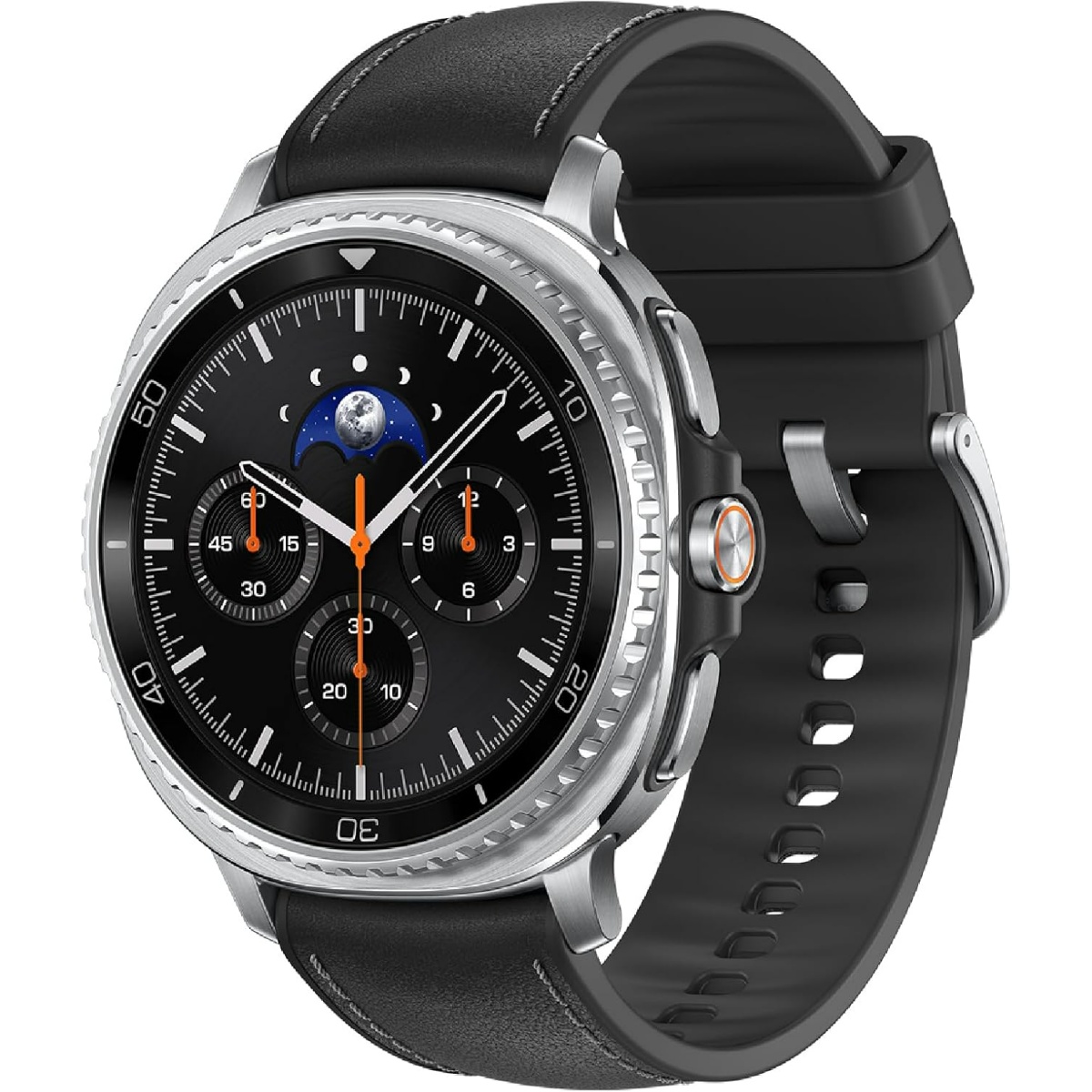
The Samsung Galaxy Watch8 Classic 46mm is built for people already inside the Galaxy ecosystem. A 46mm stainless steel case, rotating bezel, sapphire crystal and a Super AMOLED up to 3,000 nits make it a full smartwatch first and a health device second.
Blood pressure arrived in 2026 through Samsung Health Monitor, and once it’s set up you read systolic, diastolic and heart rate straight from the watch 📱. ECG, irregular rhythm notifications, sleep coaching and body composition sit alongside it.
The hardware is built to last: 5 ATM + IP68 and MIL-STD-810H, a 445mAh battery, Wear OS with 64 GB of storage, dual GPS, NFC and optional LTE.
The workflow is where it differs. Samsung’s blood pressure feature is calibrated with a third-party upper-arm cuff and needs re-calibrating every 28 days, so that cuff stays in your closet instead of leaving it, and Samsung states the feature isn’t for diagnosis or treatment of disease. The BP function also needs a compatible Android phone and Galaxy Watch, which rules out iPhone users. Reviewers flag weight and the stock band, and battery reports vary day to day. It’s a strong buy for Galaxy owners who want a real smartwatch first, as long as re-calibrating every four weeks doesn’t defeat the purpose.
Pros
- Stainless steel case, sapphire crystal and a rotating bezel
- Systolic, diastolic and heart rate readable on the watch once calibrated
- ECG, irregular rhythm notifications, sleep coaching and body composition
- 5 ATM and IP68, plus MIL-STD-810H durability
- Wear OS with 64 GB, dual GPS, NFC and optional LTE
- Super AMOLED up to 3,000 nits, readable in direct sun
- Established brand with a familiar service path
Cons
Needs re-calibrating with an arm cuff every 28 days
Blood pressure works only with a compatible Android phone
Weight and the stock band are recurring themes in reviews

from Wellue
Overall Grade
B+
Rating
9.0/10
OVERALL ANALYSIS
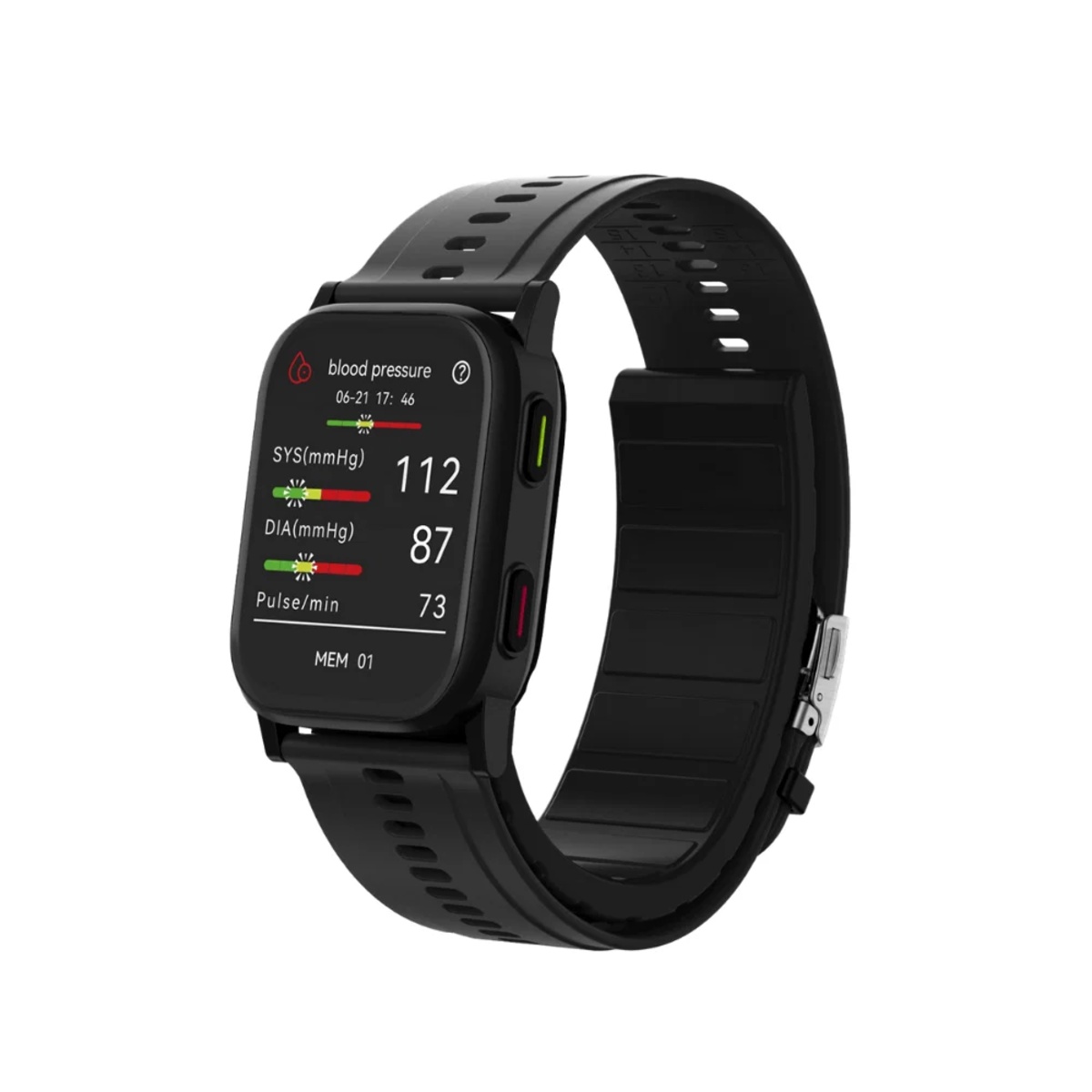
The Wellue BPW1 takes the same road as our top pick. A built-in micro air cuff inflates on your wrist and reads by the oscillometric method 🩺, with no upper-arm cuff calibration in the routine.
Its stand-out feature is scheduled readings — set it to measure every 30 or 60 minutes and it builds a day-and-night picture on its own, which is what you want if you’re watching a morning surge. Wellue publishes full specs too: a 13.5–21.5 cm (5.3–8.5 in) wrist range, cuff pressure 0–229 mmHg, and manufacturer-stated pressure accuracy of ±3 mmHg. Its product page cites 510(k) K182018, a record you can look up yourself.
The software is where it gives ground. Independent 2026 testing describes unstable connectivity and a basic app, and Wellue’s own FAQ says history can’t be exported — you view it in the app or take a screenshot, which is awkward when a clinician asks for it. The touchscreen is sensitive enough that reviewers report changing settings by accident, the inflation is audible in a quiet room, and the smart features are thin next to a full smartwatch. It’s a good fit for people who want built-in cuff readings on a schedule, as long as you don’t need to hand the data to anyone.
Pros
Built-in micro air cuff, with no arm cuff calibration needed
Scheduled readings every 30 or 60 minutes
Fits wrists from 13.5 to 21.5 cm, or 5.3 to 8.5 in
Publishes cuff pressure, BP range and stated accuracy
Product page cites 510(k) K182018, a record you can look up
330mAh with a magnetic charger and about a 2-hour charge
Cons
History can’t be exported; you view it in the app or screenshot it
Connectivity and app problems are the clearest theme in independent testing
Touchscreen is sensitive enough to change settings by accident
Smart features are thin next to a full smartwatch

from YHE
Overall Grade
C+
Rating
8.6/10
OVERALL ANALYSIS
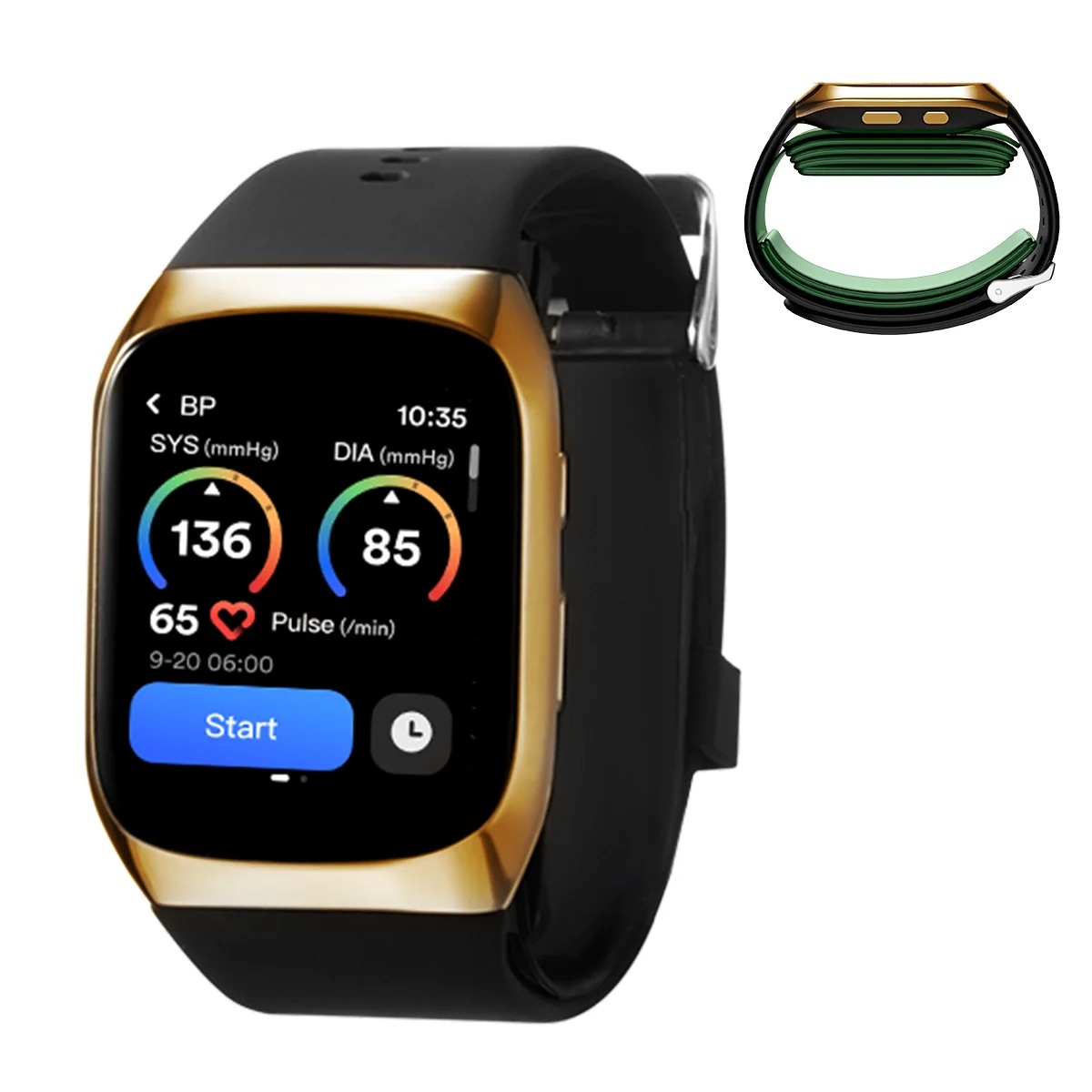
The YHE BP Doctor Med is blood pressure first and everything else second. A patented dual inflatable cuff inflates and deflates on its own for an oscillometric wrist reading 🩺.
Battery is its other card. YHE states up to 7 days, longer than most watches carrying a pump, and at about 50 g with a 1.61-inch AMOLED it wears more like a normal watch than a wrist monitor.
The wrist range runs about 14–20 cm (5.5–7.8 in), and it connects over Bluetooth BLE 5.0 with sleep and activity tracking sitting alongside the blood pressure work.
Two things are worth thinking about. Water protection is only IP22, and YHE says to keep it dry while measuring and charging, so all-day wear has limits a rain-rated watch doesn’t. Its App Store rating is low, with owners citing health-ecosystem integration, an inability to delete a bad reading, and permissions; strap tightness shifts readings enough that owners notice; and the localization settings — 12/24-hour, °F/°C, miles/km — aren’t always obvious. It’s a sensible pick if blood pressure is the only job you need done, as long as you keep it dry.
Pros
Dual inflatable cuff inflates and deflates on its own
Up to 7 days of battery, longer than most watches with a pump
About 50 g with a 1.61-inch AMOLED
Fits wrists from 14 to 20 cm, or 5.5 to 7.8 in
Sleep and activity tracking alongside blood pressure
Cons
- IP22 only, so keep it dry while measuring and charging
- Low App Store rating for integration, permissions and records
- A bad reading can’t be deleted from your history
- Strap tightness shifts readings more than on most watches
- Time, temperature and distance settings aren’t obvious

Overall Grade
C
Rating
8.1/10
OVERALL ANALYSIS
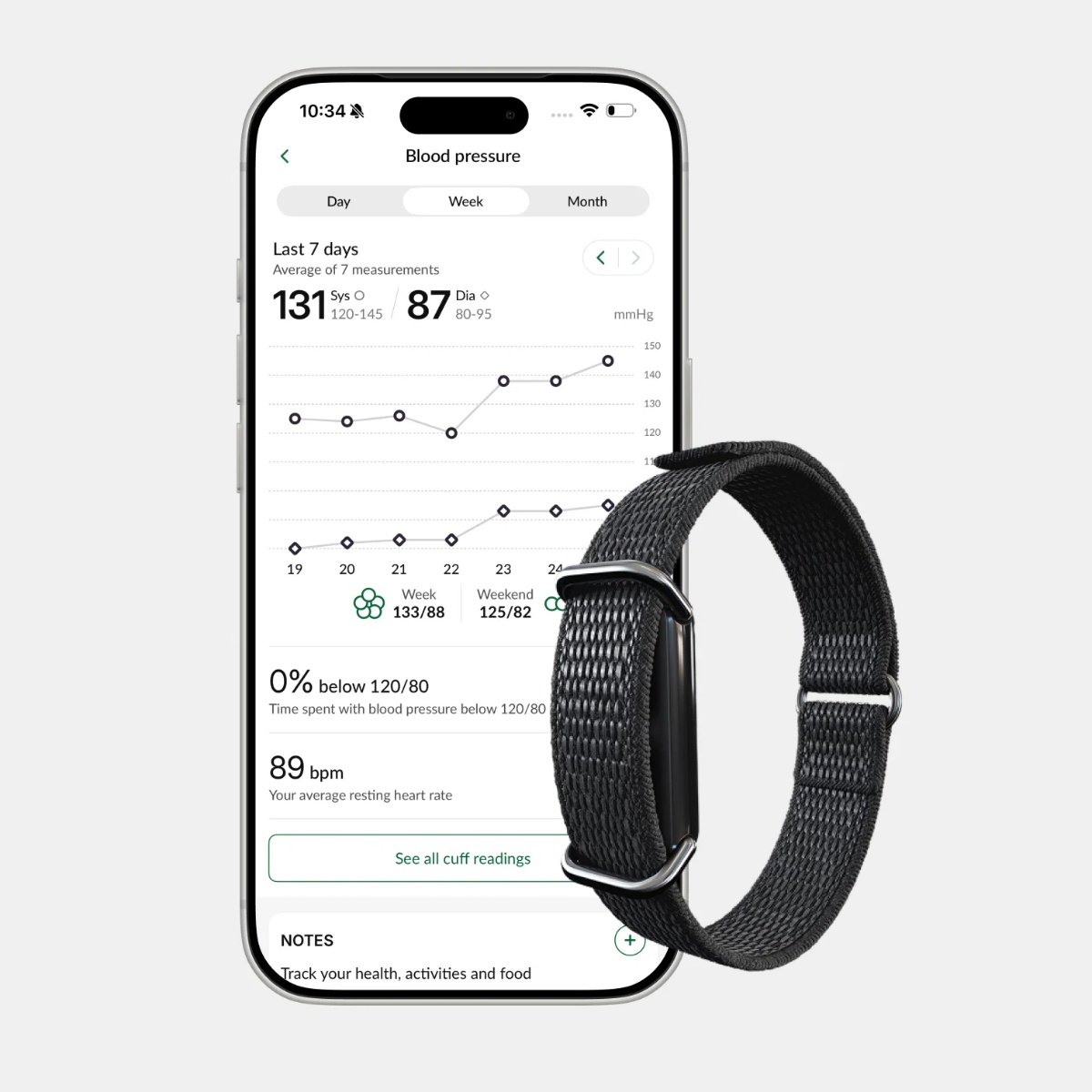
The Hilo Core isn’t a watch at all, and that’s the point. It’s a screen-free band worn day and night, paired with an app and an upper-arm reference cuff 📊, built to show blood pressure patterns rather than one reading at a time.
It’s the easiest of the five to forget you’re wearing. Band and pod weigh about 0.6 oz, battery runs up to 15 days, and IP68 covers hand washing, showering and swimming.
The reference workflow is unusually clear. The included upper-arm cuff is used at setup, about every 30 days, and any time you want an exact reading on the spot — and Hilo keeps cuff reference measurements and band wellness trends separate rather than blurring the two.
The trade-offs are structural. Hilo Core as a system is a general wellness product rather than an FDA-cleared medical device, though the included arm cuff is cleared. You can’t tap the band for an instant number, so the arm cuff stays in the routine every 30 days; there’s no screen, no calling and no ECG; App Store reviewers report detailed trend data not syncing fully to Apple Health and limited export; and the hardware comes with a first-year membership that renews annually. It’s a reasonable pick for people who care about day-and-night patterns above all, as long as a subscription and an arm cuff both stay in the picture.
Pros
- Screen-free band worn day and night for pattern tracking
- Up to 15 days of battery at about 0.6 oz
- IP68 covers hand washing, showering and swimming
- Included arm cuff handles exact on-the-spot readings
Cons
The system is a general wellness product, not a cleared medical device
The band can’t give you an instant reading on its own
Arm cuff reference stays in the routine every 30 days
No screen, no calling and no ECG
Membership renews annually after the first year
❓What Is a Blood Pressure Watch?
A blood pressure watch is a wrist-worn device that reports systolic and diastolic pressure in mmHg. The important difference between models isn’t the screen — it’s how the number is produced. Some inflate a real cuff built into the strap and measure by the oscillometric method, the same principle as the monitor in a clinic. Others estimate pressure from optical signals and need periodic calibration against an upper-arm cuff.
That difference decides your routine. A cuff-in-the-strap watch keeps everything on your wrist. An optical or hybrid system means an upper-arm cuff stays in the house, coming out at setup and then every 28 or 30 days depending on the brand — which matters if getting rid of the arm cuff was the reason you were shopping.
Regulatory wording matters more here than in most categories. FDA-cleared and FDA-authorized describe specific pathways for specific devices, while FDA-approved means something different again and is often used incorrectly on product pages. A clearance can also cover one function and not the others on the same device. In 2025 the FDA issued a safety communication warning people not to rely on blood pressure wearables that lack marketing authorization.
Whatever you buy, technique decides the number. Standard guidance for home measurement is to sit quietly for five minutes with your back supported and feet flat, keep the cuff at heart level, and not talk during the reading, and to avoid measuring within 30 minutes of exercise, caffeine or smoking. A wrist device is especially sensitive to arm position. Home readings are for tracking trends and sharing with your clinician — a validated upper-arm cuff remains the reference, and no wearable should be used to diagnose a condition or change a medication on your own.
🎯 Key Features & Advantages: Blood Pressure Watches
Measuring Stops Being a Project: No cuff to fetch, unroll, wrap and put away, so the reading actually happens.
Morning and Evening Line Up: Readings log themselves, so you see a pattern instead of remembering one number.
Something to Show at the Appointment: A record of the weeks before a check-up says more than a single reading in the office.
Readable Without Glasses: Large displays and a spoken result lower the barrier for older users considerably.
One Device on the Wrist: Calling, heart rate and notifications live alongside the health tools instead of on a second gadget.
Travel Doesn’t Break the Routine: A hotel room or an airport gate works as well as your kitchen table.
Family Can Stay in the Loop: Shared records mean an adult child can see that today’s reading happened.
Help Is One Press Away: SOS calling matters most to exactly the people most likely to need it.
🔍 Smart Buying Guide: Blood Pressure Watches
Cuff or Estimate: Decide first whether you want a real inflatable cuff on your wrist or an optical estimate with periodic calibration.
What Calibration Costs You: If a watch needs an arm cuff every 28 or 30 days, that cuff is part of the purchase.
Measure Your Wrist First: The airbag strap is both the cuff and the band, so a wrist outside the stated range affects the reading, not just comfort.
Display and Voice: For an older user, type size and a spoken result matter more than any spec on the box.
How the Data Leaves: Check export, Apple Health and Google Health Connect before you rely on handing a record to a clinician.
Read the Water Rating Literally: IP67, IP68 and 5 ATM are different, and only the brand’s own wording tells you what’s allowed.
Strap Replacement: An airbag strap is a wear part, so check what a replacement costs and whether you can get one.
⚠️ Smart Shopper Alert: Blood Pressure Watches
Reading a Number as a Validated Measurement: A watch showing mmHg isn’t automatically a validated monitor, and the FDA has warned specifically about unauthorized blood pressure wearables.
Confusing FDA-Cleared With FDA-Approved: They describe different pathways, and a clearance may cover one function rather than the whole device.
Ignoring Posture: Arm position, stillness, talking and strap tightness can move a wrist reading substantially on the very same device.
Treating IP67 as Swim-Ready: IP ratings come from static lab tests, and swimming adds pressure, temperature and wear, so follow the brand’s stated use.
Reading 24-Hour Tracking as Clinical Monitoring: Most devices take readings at set intervals, which is not the same as an ambulatory monitor fitted at a clinic.
By Elaine Ruiz
Elaine Ruiz is a seasoned Home Health Device Analyst with 2+ years of experience testing over 26 blood pressure monitors and wearables. Specializes in performance evaluation of at-home blood pressure tracking for older adults and family caregivers.