In-Depth Product Analysis for Informed Consumer Choices

Best 5 Laser Levels of 2026
One Setup, Green Lines Across the Whole Room
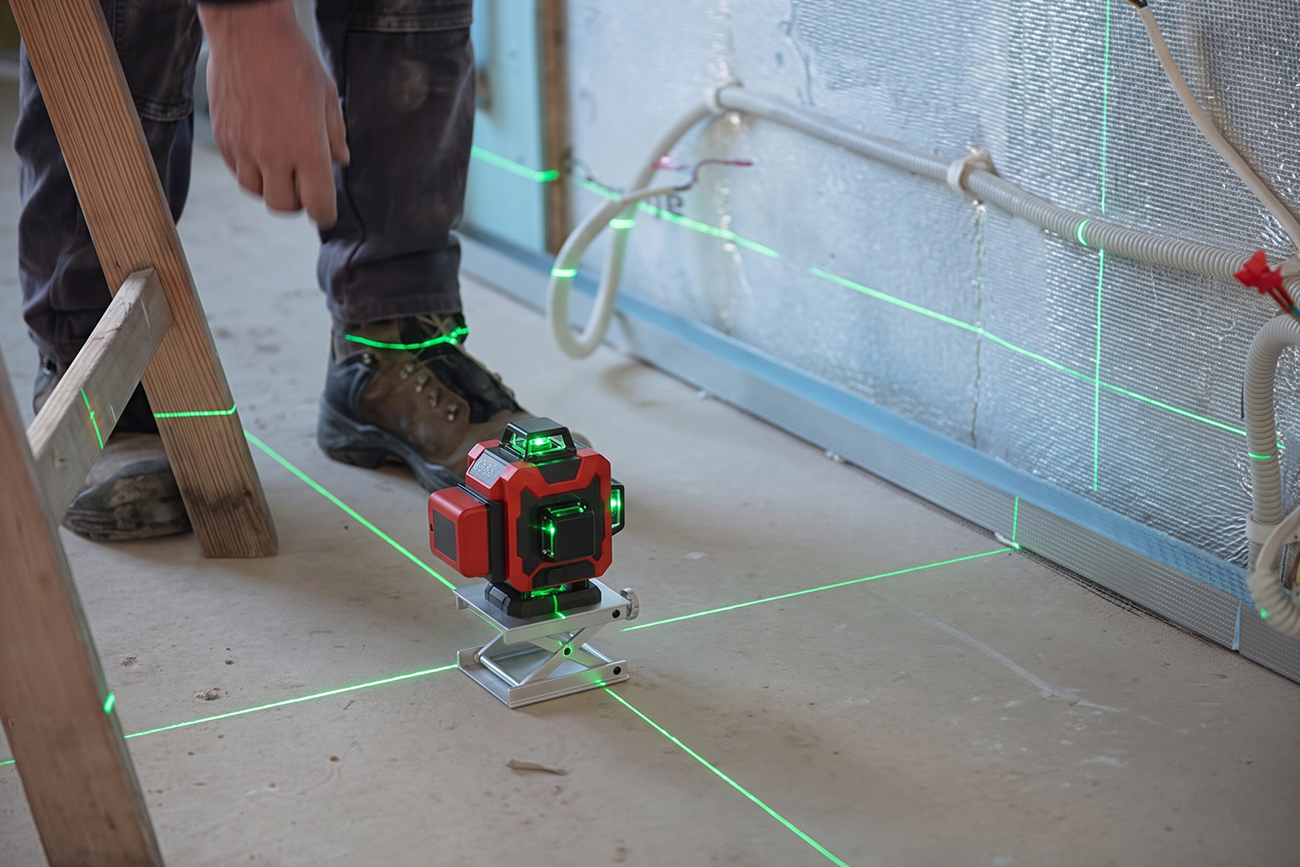
Whether you’re hanging a run of wall cabinets, setting the first course of tile or framing a partition wall, everything after that first mark depends on one accurate reference. A four-foot level checks a short span at a time, which is fine for a single bracket but leaves you carrying a measurement from one stud to the next and hoping it holds.
A laser level projects a bright line across the wall, floor or ceiling and holds it there while both your hands stay on the work. One setup gives you a reference that every cabinet, outlet box and tile row on that run can be marked against, instead of a number you have to re-measure at every position.
To find the right tool for interior work, we tested 34 laser levels over four years 📐, judging each one on how much of a room it covers from a single setup, the accuracy tolerance it publishes, what happens after the tool takes a knock, and how much else you have to order before the first job.
For most interior work, we recommend a green tool with full 360° planes rather than a two-line cross. A plane wraps the room from one position, so a cabinet run, a tile course and a ceiling grid all reference the same line instead of being re-established at every wall. And a green beam sits where the human eye is most sensitive — the difference between reading a line on white drywall under work lights and hunting for it.
Before you spend, read on for what to look for and what to avoid, then our picks for the top 5 laser levels of the year. First up is the Clorant 360° Green Laser Level, the tool that covered the widest range of interior work in this test.

By Russ Delgado
Russ Delgado is a seasoned Jobsite Tools Analyst with 4+ years of experience testing over 34 laser levels and layout tools. Specializes in performance evaluation of interior layout gear for remodelers, installers and serious DIYers.
Our Evaluation Standards
Coverage From One Setup
Evaluated how much of a room each tool references before you pick it up and move it, counting planes, cross lines and plumb points together
Accuracy You Can Mark To
Tested the tolerance each maker publishes at a stated distance, since that figure, not the line count, decides whether a cabinet run or a tile course stays true
Staying True After a Knock
Assessed drop ratings, sealing and pendulum protection, because a level that still lights up is not the same as a level that is still level
Runtime and What's in the Box
Measured how long each one runs on a charge, and how much else you have to order before it earns its place in the truck

from Clorant
Overall Grade
A+
Rating
9.6/10
OVERALL ANALYSIS
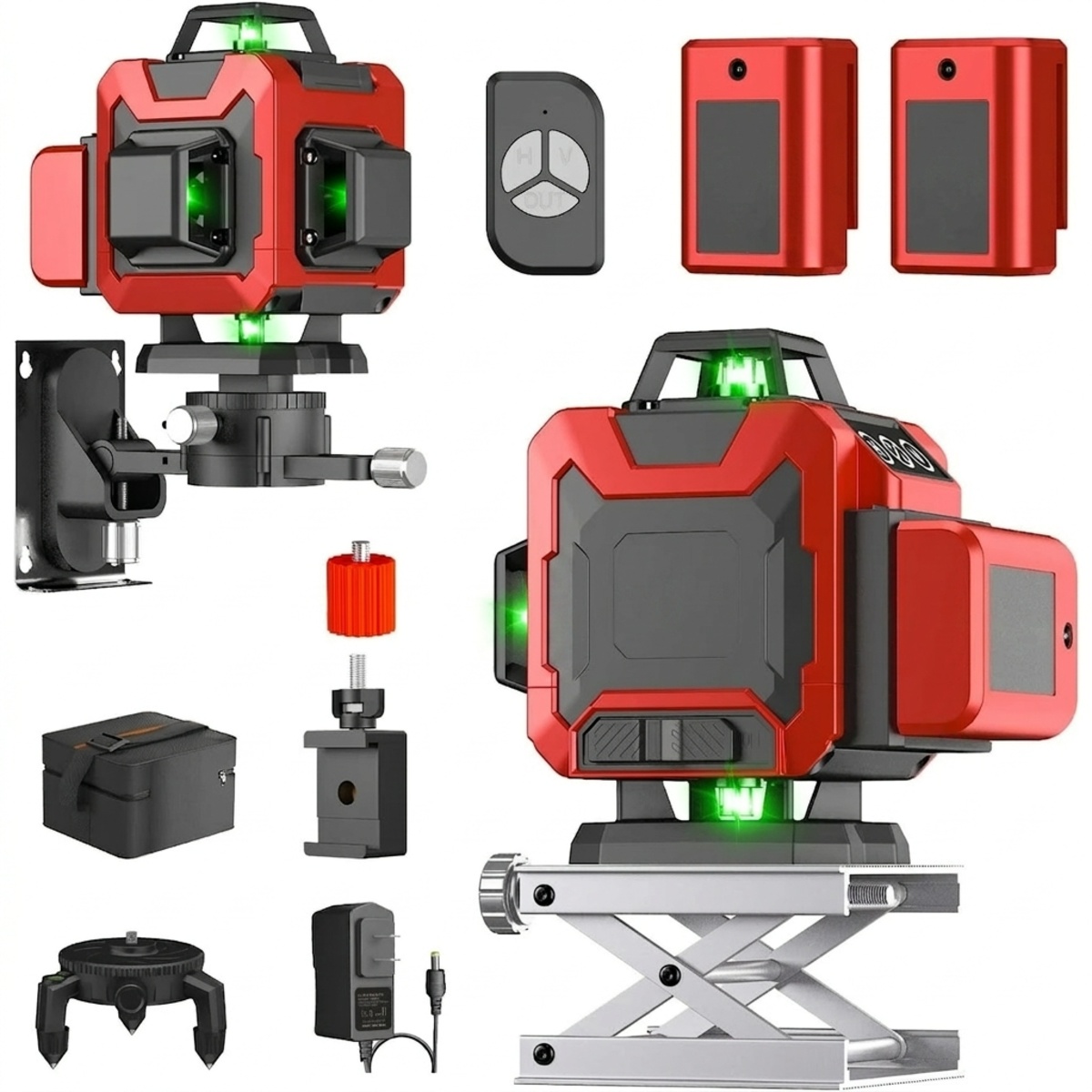
Four 360° green planes, so the whole room works off one setup. The Clorant 360° Green Laser Level throws two horizontal and two vertical planes at the same time 📏 — a floor line, a ceiling line and two verticals — so a cabinet run, a tile course and a ceiling grid all reference the same position instead of being re-established at every wall.
Accuracy you can mark to, at a distance you’ll actually use. It holds ±1/9 in at 33 ft and stays visible to 196 ft indoors, which puts the far end of a long hallway or an open basement inside a single setup. Self-leveling handles the rest the moment you set it down.
A drop doesn’t end the job. A 1 m drop rating and IP54 sealing sit behind a protective rubber housing 🛡️, which counts for more than any beam spec on the day the tool goes off a bucket or a stepladder. That’s the difference between losing an afternoon and losing a tool.
You run it from where you’re working. A remote switches planes from across the room, so you’re not walking back to the tripod every time the layout changes, and a rechargeable battery gives 16 hours of continuous use — long enough that it stays where you put it for a full working day.
Whether you’re framing a basement or setting tile in a bathroom, this level’s complete-kit design means nothing else to order before the first job. A mini tripod, magnetic clamping base, remote, spare battery and carrying case all come in the box 🧰 — no receiver to buy, and no battery platform to buy into.
Pros
Four 360° green planes, two horizontal and two vertical
Accuracy of ±1/9 in at 33 ft
Visible to 196 ft indoors from a single setup
1 m drop rating behind a protective rubber housing
IP54 against dust and splashes
Self-levels on its own once you set it down
Remote switches planes from across the room
Rechargeable battery runs 16 hours of continuous use
Mini tripod, magnetic clamping base and spare battery included
Carrying case in the box, with no receiver to buy
Cons
Occasionally out of stock due to strong demand
Delivery takes 1-2 days longer than major brands.
THE RESULT
The Clorant 360° Green Laser Level stands out as 2026’s most complete pick for interior layout, combining four 360° planes and ±1/9 in accuracy at 33 ft with a 1 m drop rating and a kit that needs nothing added. Its full-room coverage 🏆 and 16-hour runtime justify a quick decision before peak-season stock runs out.

from Bosch
Overall Grade
B+
Rating
9.3/10
OVERALL ANALYSIS
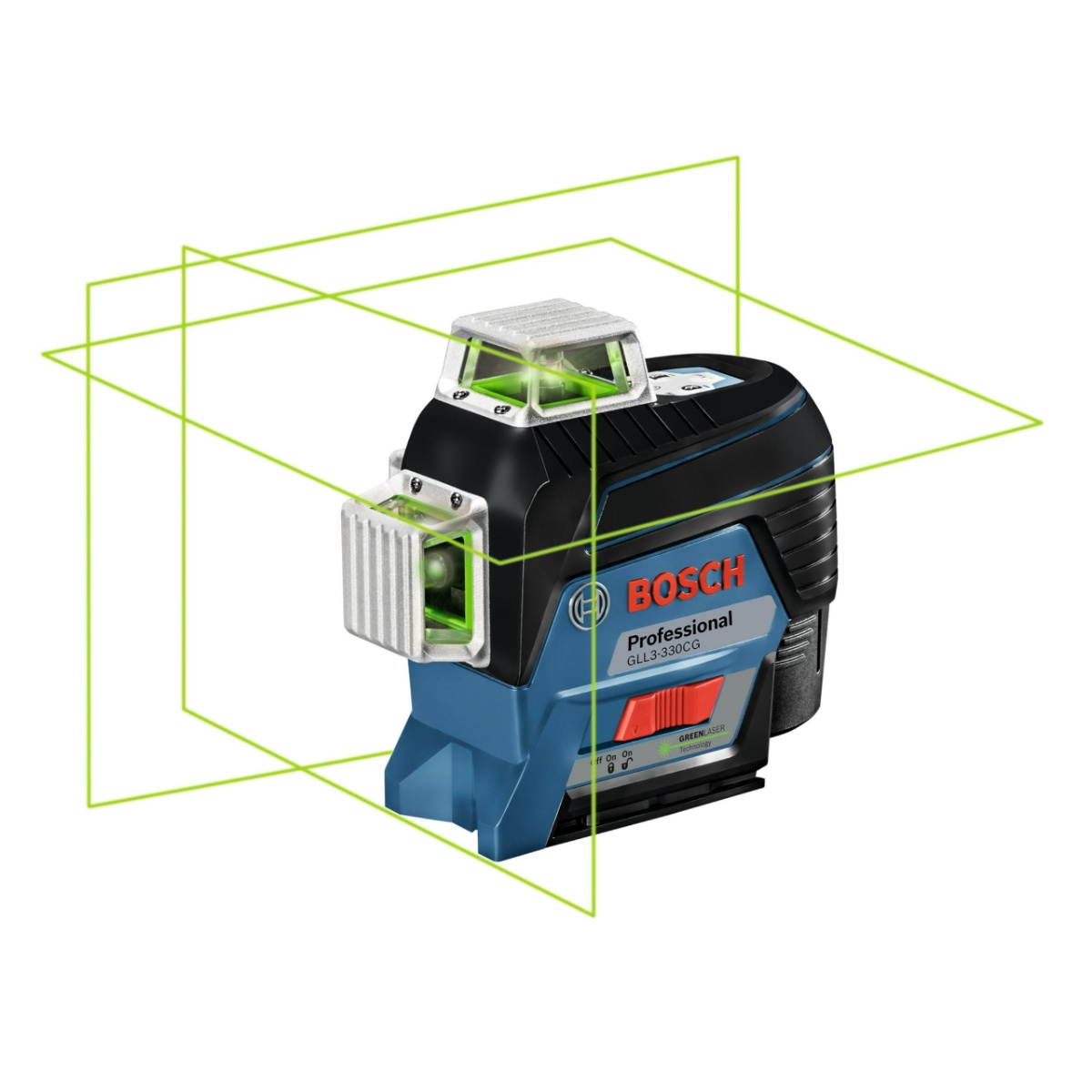
The Bosch Green Laser Level covers a room three ways at once. Three 360° green planes, one horizontal and two vertical 🏗️, mean framing, ceiling layout and squaring all read off the same setup, with no rotating and re-leveling in between.
The reach is built for big spaces. Lines stay visible across a 200 ft diameter, and a 330 ft diameter with the optional receiver, which puts warehouses, commercial floors and cross-room shots inside its working envelope.
It’s built to stay in service. CAL Guard flags calibration trouble after a drop or heat exposure, Bluetooth and an app switch planes from across the room, and it runs on either a 12V Max pack or four AA cells through an adapter. 1/4-20 and 5/8-11 threads and a positioning device come with it.
All of that draws power and attention. Battery life is a repeated theme in owner reviews, especially with several planes running bright at once, and opinions on the included mount split — some owners find it turns or won’t lock precisely under a knock or vibration. High-ambient visibility reviews are mixed as well, which is why the receiver still matters for serious outdoor work, and the blinking behavior in manual mode confuses people new to the feature. It’s a strong buy for contractors doing whole-building layout, as long as you’ll carry spare batteries and learn the modes.
Pros
Three 360° green planes, one horizontal and two vertical
Visible across a 200 ft diameter with no receiver
330 ft diameter with the optional receiver
CAL Guard flags calibration trouble after a drop or heat
Bluetooth app switches planes from across the room
Runs on a 12V Max pack or four AA cells
1/4-20 and 5/8-11 threads with a positioning device included
Cons
Battery life draws repeated complaints with several planes running
Owners split on whether the included mount locks firmly enough
Blinking manual mode confuses people new to the feature

from DEWALT
Overall Grade
B+
Rating
9.0/10
OVERALL ANALYSIS
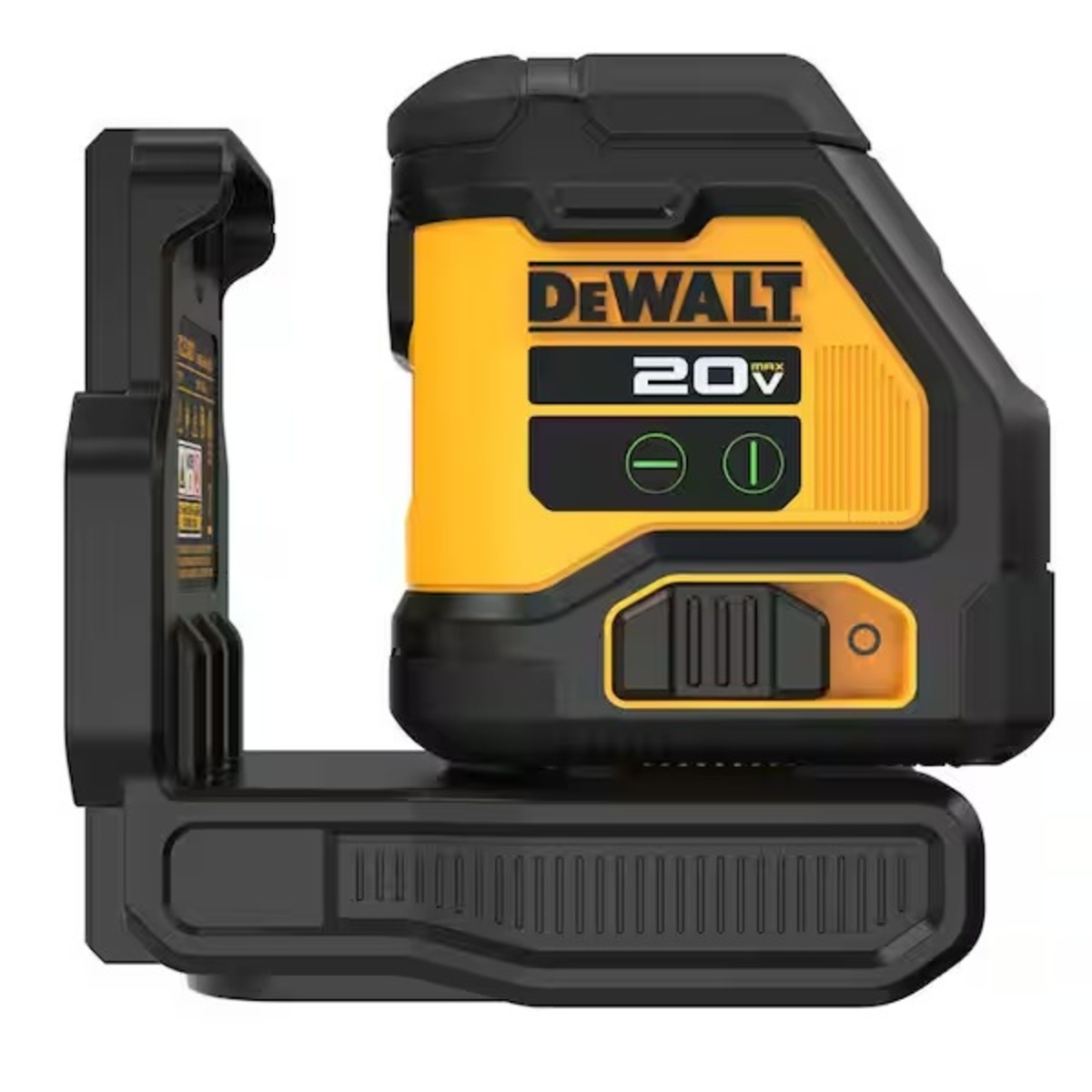
The DEWALT Green Laser Level is the one that stays running all day. Up to 16 hours on a 20V MAX battery ⚙️ means a contractor already carrying those packs adds a laser without adding another charger to the truck.
The distance is there too. Cross lines stay visible to 180 ft and reach 330 ft with a compatible detector, accuracy is published at ±1/8 in at 30 ft, and the kit brings a target card, a magnetic enhancement plate, a magnetic tripod and wall mount bracket, 1/4-20 and 5/8-11 threads and a hard case.
The shape of the beam is the limit. It projects a horizontal and vertical cross rather than a 360° plane, so continuous whole-room references mean rotating and re-setting the tool. Recent buyers repeat that daylight visibility falls short of what a green beam led them to expect, some find the line wide enough to soften a fine mark at distance, and there’s no height fine-adjustment knob, so a tripod does that job instead. The tool-only version leaves the battery and charger to you. It’s a good fit for contractors already inside the 20V MAX system who want runtime and reach, as long as cross lines cover the work.
Pros
Up to 16 hours of runtime on a 20V MAX battery
Accuracy published at ±1/8 in at 30 ft
Visible to 180 ft, and 330 ft with a compatible detector
Magnetic tripod and wall mount bracket in the kit
1/4-20 and 5/8-11 threads with a hard case
Shares batteries with a 20V MAX tool collection
Cons
Cross lines rather than a 360° plane, so whole-room work means moving it
Daylight visibility falls short of what buyers expect
Line reads wide enough to soften a fine mark at distance
No height fine-adjustment knob, so a tripod handles that

from Huepar
Overall Grade
C+
Rating
8.6/10
OVERALL ANALYSIS
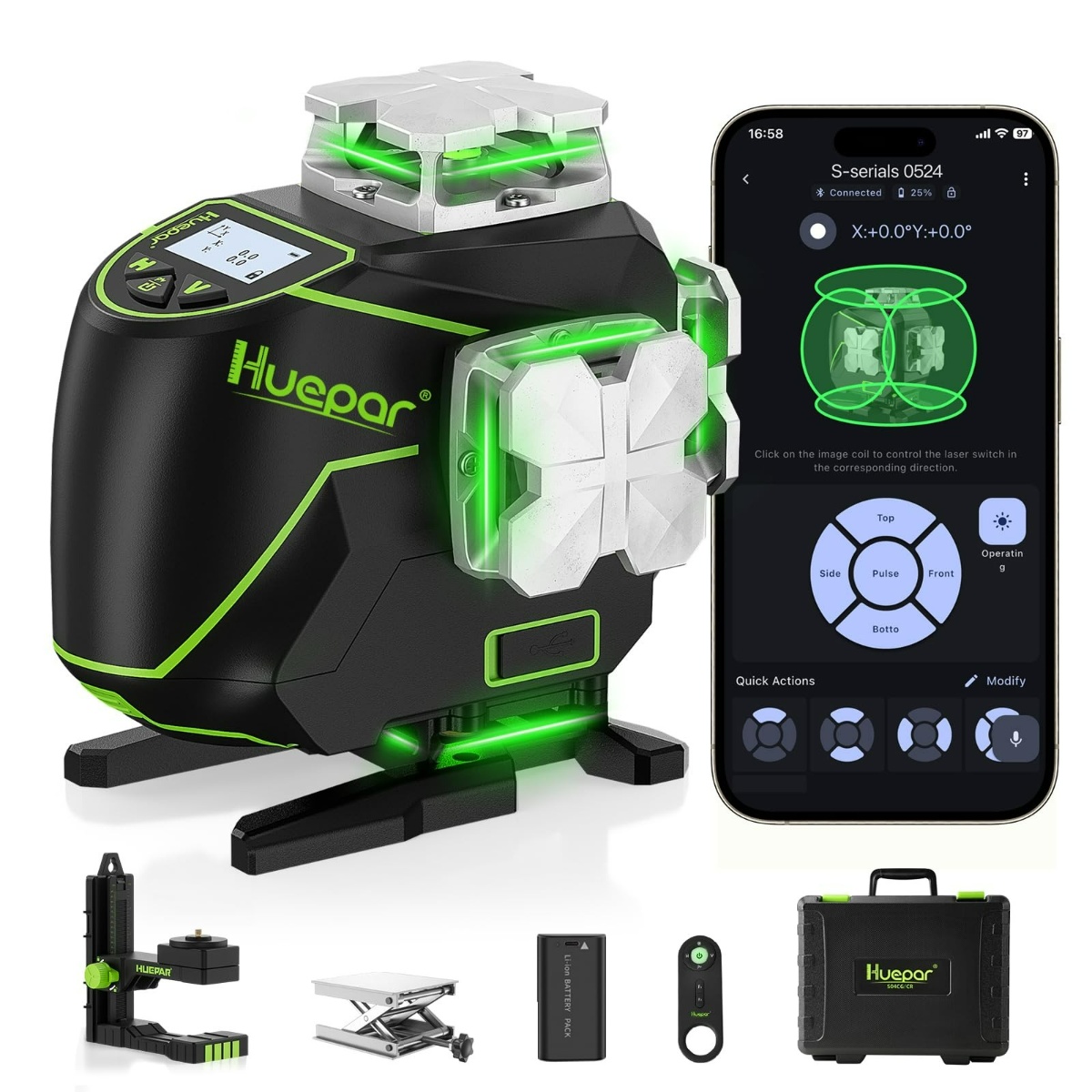
The Huepar Green Laser Level puts four 360° planes in the room at once. Two horizontal and two vertical 🧱 give you a floor line, a ceiling line and two verticals from one setup — the layout tile setters and cabinet installers actually want.
The numbers hold up. Accuracy is published at ±1/9 in at 33 ft, it self-levels within ±3.5° in about four seconds, and Pulse Mode carries it to 130 ft, with receiver kits reaching around 200 ft.
The kit is unusually complete. An LCD, a Bluetooth app and a remote handle control, a 2600mAh removable battery, four AA cells or a direct plug-in cover power three ways, and a magnetic bracket, lifting base, steel sheet, target plate and hard case come in the box.
The base and the long term are where owners push back. The mount draws repeated complaints for feeling light and shifting during fine adjustment, and buyers have received a different base version than the listing showed. Calibration drift appears in owner reports after months of use or transport, which matters when you’re marking to a tolerance. The removable battery mostly charges inside the tool rather than in a separate charger, and kit contents vary enough between batches to confuse people. It’s a sensible pick for remodelers who want four planes and app control on a tight budget, as long as you’ll check it against a wall from time to time.
Pros
Four 360° planes, two horizontal and two vertical
Accuracy published at ±1/9 in at 33 ft
Pulse Mode reaches 130 ft, and about 200 ft with a receiver
LCD, Bluetooth app and remote control included
Runs on a removable battery, four AA cells or mains power
Cons
Mount feels light and shifts during fine adjustment
Buyers have received a different base version than the listing showed
Calibration drift appears in owner reports after months of use
The removable battery mostly charges inside the tool
Kit contents vary between batches

from Klein Tools
Overall Grade
C
Rating
8.1/10
OVERALL ANALYSIS
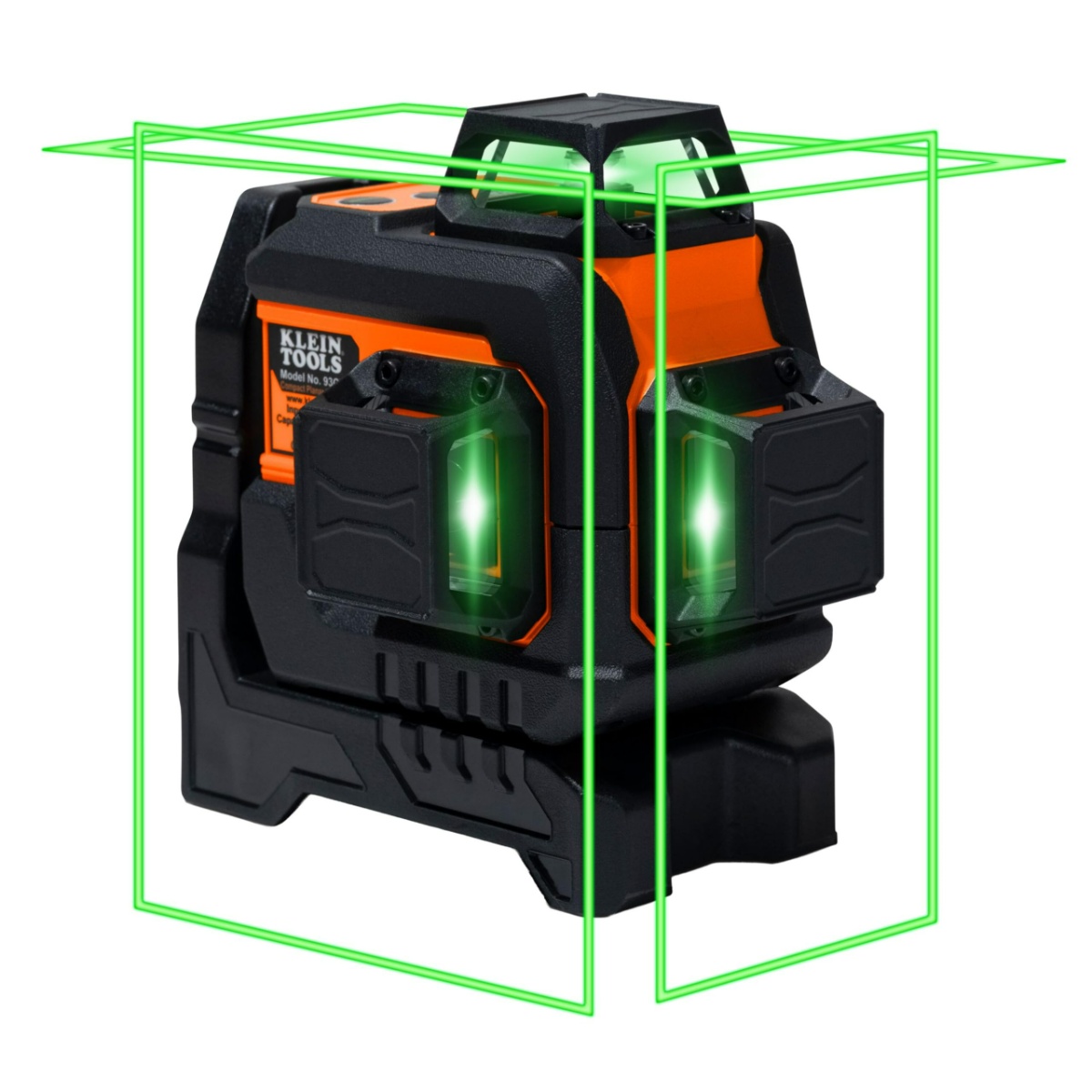
The Klein Tools Green Laser Level tells you exactly what you’re buying. Class 2, 508–525nm, ≤1mW, accuracy of ±3mm per 10m and 3 ft drop protection are all published 🔧 — everything a professional buyer needs to size up the risk before spending.
The coverage suits interior trades. Three 360° planes in X, Y and Z switch on individually, so you light only the reference you need and keep the rest of the room readable.
It’s sized for interior trades. A rechargeable battery runs more than six hours, Tilt Mode joins self-leveling for slope work, and a magnetic bracket with an integrated 1/4-20 mount handles most surfaces. Klein is also a name most electricians already carry.
Outdoors is where it stops. Poor daylight visibility is the single most concentrated complaint in owner reviews, so exterior work needs something else entirely. The magnetic bracket gets named repeatedly for not holding on corner bead and some metal surfaces, a handful of owners report short runtime or charging failures out of the box, and a few describe internal lock or power-switch parts failing with no outward sign. The accessory set is basic. It’s a reasonable pick for electricians and interior trades who value published specs, as long as the work stays inside.
Pros
Class, wavelength, accuracy, runtime and drop rating all published
Three 360° planes that switch on individually
Tilt Mode alongside self-leveling for slope work
Magnetic bracket with an integrated 1/4-20 tripod mount
Cons
Daylight visibility is the most concentrated complaint in reviews
Magnetic bracket doesn’t hold on corner bead or some metal
Short runtime and charging failures reported out of the box
Internal lock and power-switch failures appear in a few reports
Accessory set is basic next to rival kits
❓What Is a Laser Level?
A laser level projects a bright reference line onto your walls, floor or ceiling and holds it there while both your hands stay on the work. That’s the whole difference from a spirit level: instead of measuring one short span at a time and carrying the number to the next stud, you get a single continuous reference that every cabinet, outlet box or tile row on that wall can be marked against.
The most misread word on these listings is 360°. A 360° plane is a laser ring that wraps the whole room from one setup. A rotating base just means the tool spins on its mount, which still leaves you re-leveling at each position. Read the beam configuration line rather than the headline: a two-line cross, a 3×360 and a 4×360 are three very different tools, and plumb points are a fourth capability that line count alone never tells you about.
Accuracy and range are both quoted in ways that need reading twice. Accuracy comes as a tolerance at a distance — ±1/8 in at 30 ft — and that tolerance, not the number of lines, is what decides whether a cabinet run or a tile course stays true. Range is quoted two ways: what stays visible to the naked eye, and what a detector can pick up. A tool advertised at 330 ft may be a 180 ft tool until you buy the receiver.
Two more things decide how long a level stays useful. Green beams are easier to see than red because the eye is most sensitive around this part of the spectrum, but that’s visibility rather than power, and direct sunlight still calls for a detector or a target plate whatever the color. And a drop is only half the problem: the tool usually still switches on, so check it against a known wall reference afterward rather than assuming the lines are still level.
🎯 Key Features & Advantages: Laser Levels
One Reference for the Whole Wall: Every cabinet, box and tile row on that run gets marked off the same line instead of measured stud by stud.
You Can Do It Alone: No second person holding the other end of a chalk line or calling out heights from a ladder.
Floor and Ceiling Stay in the Same Plane: A vertical plane runs from the floor to the ceiling, which is how partition walls and drop ceilings end up lined up rather than close.
Errors Stop Stacking Up: A single reference across a room removes the small mistakes that build over ten separate measurements.
Hands Stay on the Work: The line holds itself while you hold the cabinet, the bracket or the tile.
Slope Work Gets Simple: Locked mode follows a stair stringer or a raked ceiling instead of fighting to stay level.
Bigger Jobs Feel Approachable: Cabinet runs, tile layouts and framing become checkable rather than something you eyeball and hope.
Green Lines Read Easily Indoors: White drywall under work lights is exactly where a red beam disappears and a green one doesn’t.
🔍 Smart Buying Guide: Laser Levels
Count the Planes, Not the Lines: Work out whether it’s a two-line cross, a 3×360 or a 4×360, because that decides how often you move it.
Runtime on a Single Charge: A tool that dies mid-layout costs more time than it saved, so check the stated hours rather than just the battery type.
Read the Accuracy Tolerance: A figure like ±1/8 in at 30 ft is the number that keeps a cabinet run true; more lines never make up for a loose tolerance.
Naked-Eye Range or Detector Range: Confirm which one the headline figure describes before you plan a job around it.
Check the Mount, Not Just the Tool: Magnet strength, fine adjustment and 1/4-20 or 5/8-11 threads affect your day more than another app feature.
Power Source and What’s in the Box: Tool-only versions leave out the battery and charger, and some packs only charge inside the tool.
Ask What Happens After a Drop: Look for a published drop rating or a calibration warning system, and plan to check the tool against a wall either way.
⚠️ Smart Shopper Alert: Laser Levels
Reading Green as Sunlight-Proof: Green is easier for the eye to see, but outdoor work still depends on ambient light, beam power and a detector.
Mistaking a Rotating Base for a 360° Plane: One spins on its mount, the other wraps the room from a single setup, and listings blur the two.
Buying Line Count Instead of Accuracy: More lines never fix a loose tolerance on a cabinet run, a tile course or a door track.
Assuming a Working Level Is a True Level: A tool that survives a drop and still switches on can be out of calibration, so check it against a known reference.
Ignoring the Mounting Hardware: Weak magnets and no fine adjustment turn every small bump into a re-setup, whatever the beam specification says.
By Russ Delgado
Russ Delgado is a seasoned Jobsite Tools Analyst with 4+ years of experience testing over 34 laser levels and layout tools. Specializes in performance evaluation of interior layout gear for remodelers, installers and serious DIYers.